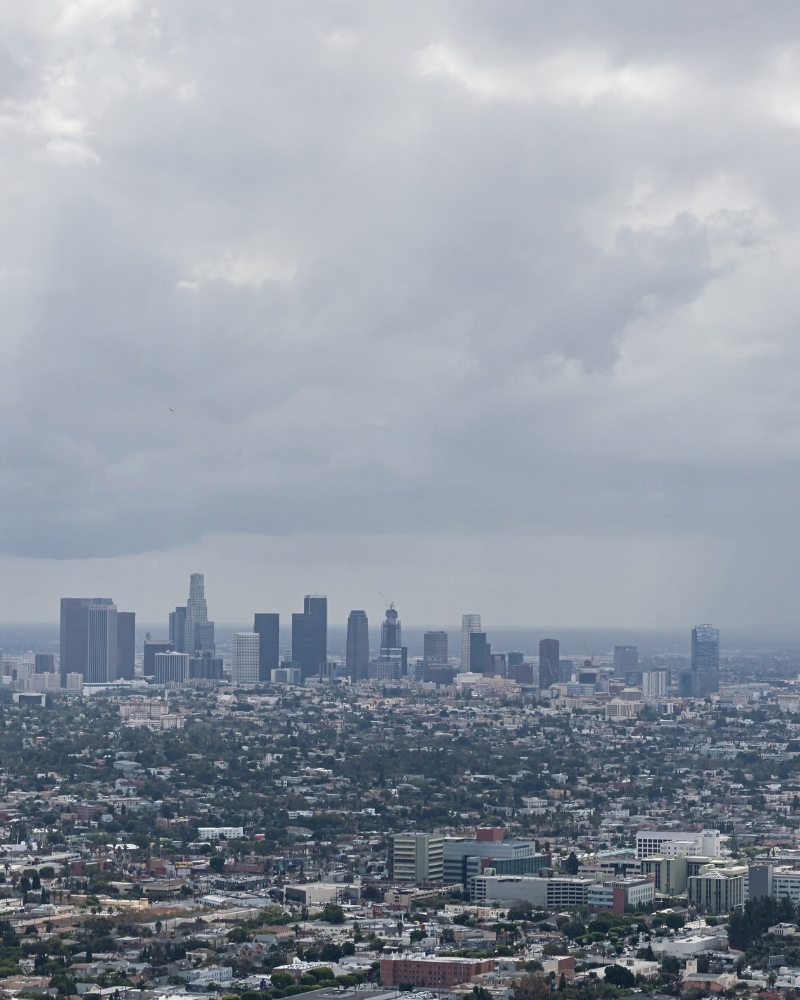
Northwest Los Angeles features a Mediterranean climate characterized by warm, dry summers and mild, occasionally wet winters. However, the lack of consistent summer rain does not mean a lack of mosquitoes.
Urban density, ornamental landscaping, and automated irrigation systems create consistent micro-habitats of standing water. In peak summer months, when temperatures consistently top 80°F, the mosquito life cycle accelerates drastically. Under these conditions, a female mosquito can lay eggs that develop into biting adults in as little as 5 to 10 days.
Because of this rapid development, pest control strategies tied to an arbitrary 30-day calendar often fail. By the time a monthly service returns, multiple generations of mosquitoes have already hatched, matured, and begun reproducing.
Standard industry practice often involves spraying every 21 to 30 days. However, if an Aedes mosquito can complete its lifecycle in 7 days during a Northwest L.A. heatwave, a 21-day spray interval leaves a massive two-week vulnerability window. During this gap, new eggs hatch, larvae pupate, and adult mosquitoes emerge to bite and lay more eggs.
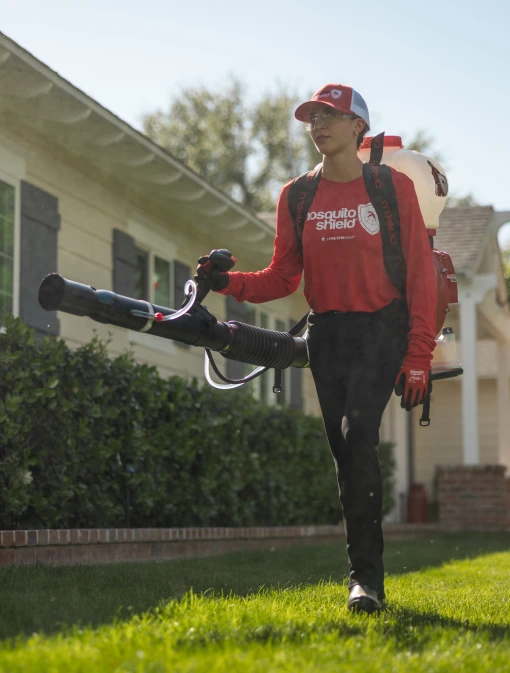
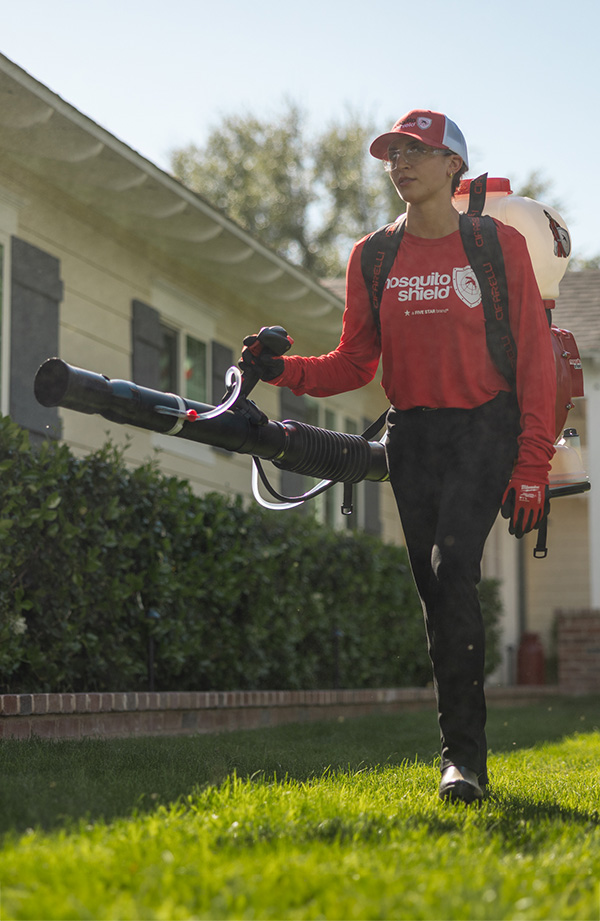
Instead of adhering to a static monthly schedule, Mosquito Shield adjusts spray frequencies based on the biological timeline of the local mosquito population and real-time weather conditions.
Mosquito activity in our area doesn’t simply disappear in the fall. The mild Southern California climate allows species to remain active much later in the year than in other parts of the country.
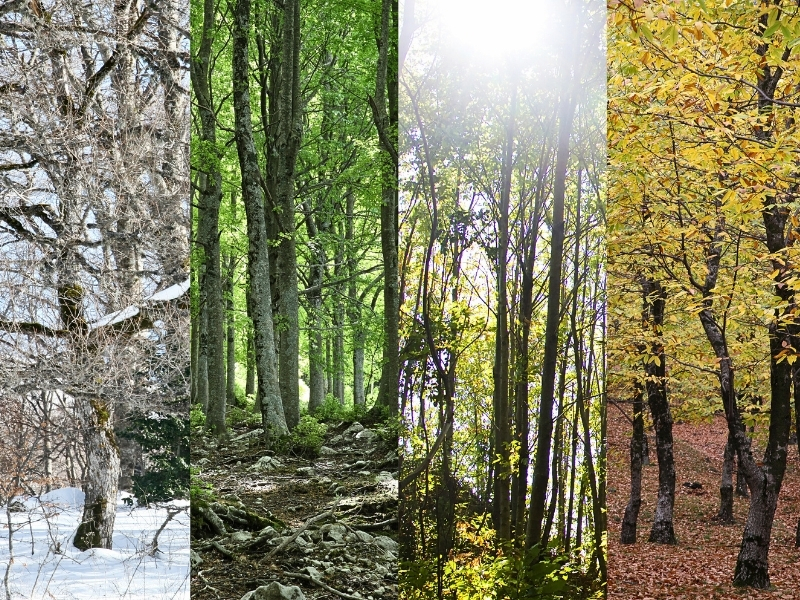
Spring Emergence (March – May)
Spring
Warming temperatures and occasional late-season rains create early breeding conditions. Culex populations begin to rise in local storm drains and neglected pools.
Summer Peak (June – August)
Summer
High heat drastically accelerates the mosquito life cycle. Yard irrigation sustains breeding grounds. This is the period of highest risk and requires the most rigorous treatment frequency.
Dry Winds & Resurgence (Sept – Oct)
Early Fall
Santa Ana winds can temporarily suppress activity by dropping relative humidity. However, once the winds fade and temperatures remain warm, moisture levels rebound, often causing a late-season spike in Aedes mosquitoes.
Winter Lull (Nov – Feb)
Winter
Cooler nights naturally reduce mosquito activity, though coastal margins and warmer inland pockets of L.A. County can still experience isolated biting on warmer days.