
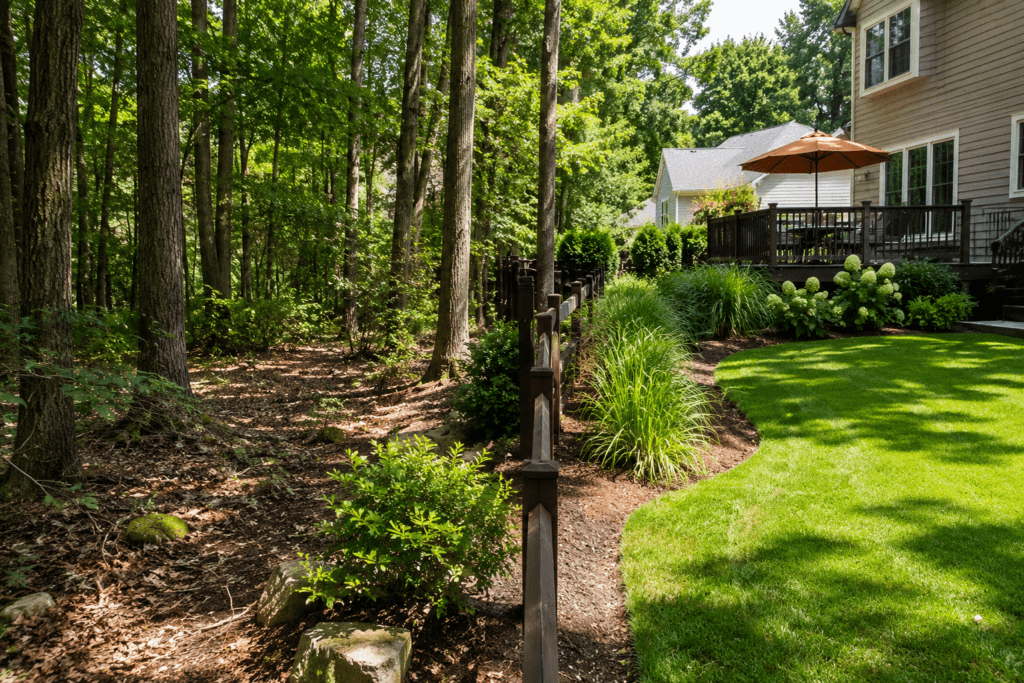
Why Woods Create Ideal Tick Habitat
Ticks thrive anywhere they can stay cool, shaded, and protected from direct sunlight. Woods naturally provide the moisture, leaf litter, and wildlife activity that help ticks survive throughout much of the year.
Common wooded environments include:
- Tree lines
- Wooded property borders
- Leaf-covered ground
- Brush and undergrowth
- Wildlife travel corridors
These conditions create excellent habitat for ticks long before they reach nearby lawns.

Ticks Don’t Stay Only In The Woods
Ticks do not actively travel long distances on their own, but they are constantly moved by deer, small mammals, birds, and even family pets.
As wildlife moves between wooded areas and residential neighborhoods, ticks can be carried into:
- Backyards
- Fence lines
- Landscape beds
- Play areas
- Pet pathways
This is one reason homeowners often begin noticing ticks without ever walking into the woods themselves.
If ticks seem more common around neighborhoods than they used to be, it may also help to understand why ticks are showing up in more residential neighborhoods.
Where Tick Activity Usually Begins
Most residential tick activity begins near the transition between woods and maintained landscaping.
Common high-risk areas include:
- Wood lines
- Fence borders
- Dense shrubs
- Leaf piles
- Natural landscape edges
These locations allow ticks to remain protected while waiting for wildlife, pets, or people to pass nearby.
For a closer look at these areas, homeowners can also review where ticks hide in your yard.
Can Homeowners Reduce Tick Pressure Near Woods?
While homeowners cannot eliminate nearby woods, they can make their own property less attractive to ticks.
Helpful steps include:
- Keep grass trimmed.
- Remove leaf piles.
- Trim overgrown vegetation.
- Create separation between wooded areas and outdoor living spaces.
- Check pets after spending time outdoors.
These simple maintenance practices help reduce favorable tick conditions around the home.
Protecting Your Yard From Nearby Tick Activity
Living near woods does not automatically mean your yard will have a severe tick problem. However, wooded property edges often create conditions where tick activity can develop more easily.
Professional tick control focuses on the transition areas where ticks are most likely to move from wooded habitat into residential landscapes.
If your family spends time outdoors with children or pets, reducing tick activity around these high-risk areas can help make the yard more enjoyable throughout the season.
Explore more:
Why Ticks Are Showing Up in Residential Neighborhoods
Frequently Asked Questions
How far do ticks usually travel from the woods?
Ticks do not move long distances on their own. Instead, they are commonly carried by deer, birds, small mammals, and pets, allowing them to spread well beyond wooded areas.
Can I have ticks even if my yard is well maintained?
Yes. Even well-maintained properties can experience tick activity if they border wooded areas or receive frequent wildlife traffic from neighboring properties.
Are tree lines the highest-risk area for ticks?
Tree lines and wooded borders are among the most common places ticks gather because they provide shade, moisture, and easy access to wildlife.
Should I avoid walking near wooded areas?
You don’t necessarily need to avoid wooded areas, but wearing appropriate clothing, checking for ticks afterward, and managing nearby landscaping can help reduce exposure.
Does professional tick control treat wooded property edges?
Professional tick control commonly focuses on shaded landscape edges, wooded borders, and other areas where ticks are most likely to move into residential yards.


