
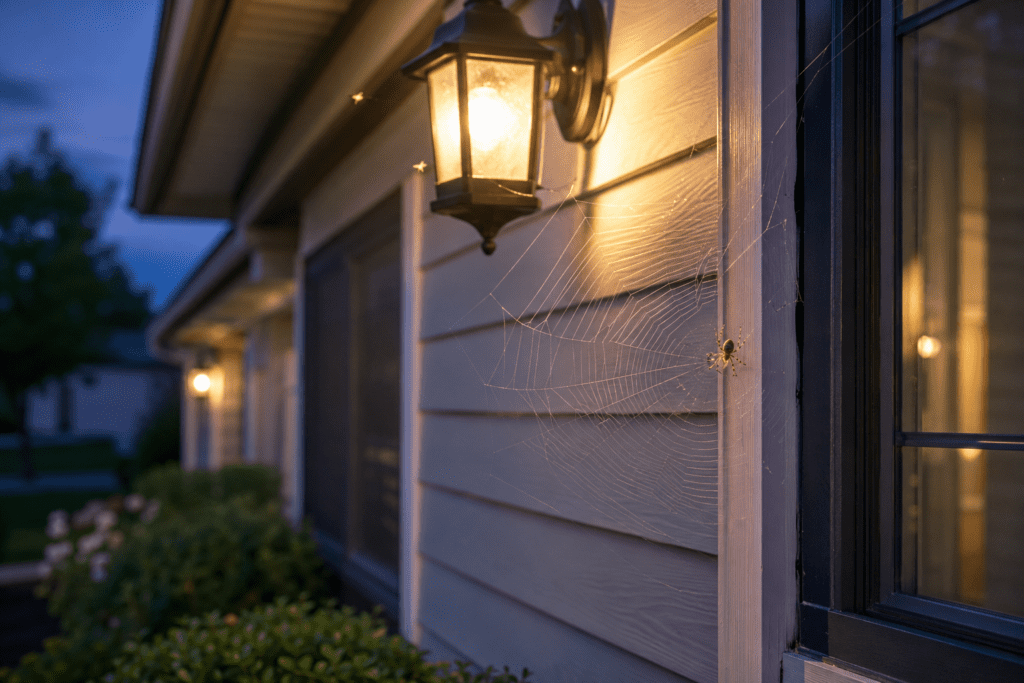
Finding an occasional spider indoors is common. But when spiders or fresh webs keep appearing in the same rooms, the house may be providing dependable access to prey, shelter, moisture, or protected places to build a web.
Why Are Spiders Coming Into Your House?
Spiders may enter a house through cracks, gaps, doors, windows, vents, utility openings, and items carried indoors. Some wander inside accidentally, while others remain because the house offers insects to eat, protection from outdoor conditions, or undisturbed spaces where they can hunt or build webs. Recurring spider activity can therefore point to both exterior access and another pest population supporting them.
Four Reasons Spiders May Be Appearing Indoors
Spiders are not usually interested in crumbs or stored food. They are more likely to stay where they can find prey and protection.
Insects Are Providing Food
Flies, mosquitoes, moths, ants, beetles, and other small pests provide food for spiders. Exterior lights, open doors, damaged screens, and moisture problems can attract these insects and create a feeding opportunity nearby.
Protected Hiding Places
Basements, crawl spaces, garages, attics, closets, storage areas, and spaces behind furniture can remain quiet for long periods. These protected areas give spiders places to hide or build webs with little disturbance.
Changing Outdoor Conditions
Temperature shifts, heavy rain, dry weather, and seasonal changes can affect spider movement. Some spiders wander indoors while searching for shelter, prey, or a mate rather than intentionally trying to infest the house.
Easy Exterior Access
Gaps beneath doors, damaged screens, foundation cracks, vents, siding gaps, utility penetrations, and attached garages can give spiders and their prey a path into the structure.
Spiders May Be Following Other Pests
Spiders are predators. Unlike ants, cockroaches, and many other household pests, they are generally not moving through the house to reach human food. They are more interested in the insects and other small prey already living in or approaching the structure.
A spider near a window may be taking advantage of insects drawn to light. Webs around an exterior fixture may develop because moths and other flying insects gather there after dark. Spiders in a damp basement may be benefiting from moisture-loving pests hiding in the same area.
The Key Distinction
A spider may be the pest you notice, but the condition sustaining it can be a separate insect problem. Reducing spider activity often requires reducing the available prey as well as closing exterior entry points.
Removing one spider or web may address the immediate concern. If new webs or spiders continue appearing, look for the broader conditions making that location useful.
Web-Building Spiders and Hunting Spiders
The presence or absence of a web can help explain how a spider is using the area.
Because spider species and behavior vary, appearance alone may not provide a reliable identification. Avoid handling an unfamiliar spider directly, especially if you are unsure whether medically significant species occur in your area.
What the Location of a Spider May Tell You
Where spiders or webs appear can help narrow down the conditions attracting them and the routes they may be using.
✓
Windows: Insects may be gathering around indoor or outdoor light. Check the screen, frame, sill, weatherstripping, and exterior vegetation.
✓
Basements and Crawl Spaces: Darkness, moisture, clutter, and limited disturbance may provide shelter for both spiders and their prey.
✓
Bathrooms and Laundry Areas: Persistent moisture can support small insects that spiders feed on. Look for leaks, condensation, and poorly ventilated areas.
✓
Garages: Gaps around garage doors, frequent opening and closing, stored materials, and access to outdoor insects can make garages a common transition area.
✓
Ceiling Corners and Eaves: These areas can provide secure attachment points for webs while remaining out of the way of normal household activity.
✓
Closets and Storage Areas: Cardboard boxes, stored clothing, and objects left undisturbed can create protected hiding places.
✓
Exterior Lights: Webs around porch lights, doorways, and fixtures often indicate that flying insects are repeatedly gathering there.
How Spiders Get Inside a House
Spiders can enter through structural openings or be carried indoors without being noticed.
Doors and Garage Doors
Worn sweeps, damaged weatherstripping, and gaps around frames can create an easy route inside.
Windows and Screens
Torn screens, loose frames, and openings around window units can admit spiders and flying insects.
Foundation and Siding Gaps
Cracks and openings along the foundation or behind exterior materials can lead into protected voids.
Pipes and Utility Lines
Openings around plumbing, electrical wiring, cables, and HVAC equipment can connect exterior and interior spaces.
Vents, Eaves, and Rooflines
Damaged vent covers and gaps around soffits or rooflines can provide access to attics and wall spaces.
Items Carried Indoors
Firewood, boxes, outdoor furniture, plants, equipment, and seasonal decorations can conceal spiders or egg sacs.
How to Help Keep Spiders Out of Your House
The most effective prevention plan addresses spiders, their prey, their hiding places, and the openings that allow both to approach the house.
Remove Webs and Egg Sacs
Use a vacuum or long-handled brush to remove accessible webs and suspected egg sacs. Dispose of vacuum contents promptly and avoid handling spiders or egg sacs with bare hands.
Reduce the Insects Spiders Feed On
Repair screens, address moisture, clean food residue, keep trash contained, and look for other pest activity. Fewer available insects can make the area less useful to spiders.
Seal Likely Entry Points
Replace worn door sweeps and weatherstripping, repair damaged screens, and close appropriate gaps around pipes, vents, windows, siding, and the foundation.
Reduce Clutter and Hiding Places
Organize storage areas, move boxes away from walls, avoid leaving clothing or materials undisturbed on the floor, and use sealed plastic containers where practical.
Adjust Exterior Lighting
When practical, reduce unnecessary nighttime lighting near doors and windows or reposition fixtures away from common entry points. This can help reduce concentrations of flying insects near the house.
Create Separation Around the House
Trim branches and vegetation away from the structure, move firewood and debris away from the foundation, and clear recurring webs from eaves, fixtures, and exterior corners.
Inspect Items Before Bringing Them Inside
Check firewood, boxes, outdoor toys, furniture, plants, and seasonal decorations before carrying them into the living area or long-term storage.
What Repeated Spider Activity May Indicate
One spider may have wandered inside. A pattern of activity deserves a closer look.
Webs Return in the Same Location
The location may offer steady access to prey and a secure place to build. Removing the web without changing those conditions may lead to repeated activity.
Spiders Appear in Multiple Rooms
Multiple access points, widespread prey activity, or favorable hiding conditions may be present throughout the structure.
Many Small Spiders Appear at Once
A group of small spiders in one area may indicate that an egg sac has hatched nearby. Avoid spreading them into other areas while cleaning.
Exterior Webs Concentrate Near Entry Points
Webs around doors, windows, fixtures, and eaves may show where insects and spiders are most active near the structure.
Why Removing Indoor Spiders May Not Be Enough
Vacuuming a spider or removing a web addresses what is visible at that moment. It does not necessarily reduce the insects attracting spiders, close exterior openings, or address the protected areas where spiders are hiding.
Indoor cleaning, clutter reduction, and exclusion remain important. When spiders or webs repeatedly return, pairing those steps with an exterior-focused pest strategy can address the problem closer to where it begins.
Signs the Spider Problem May Need Professional Attention
✓ New spiders or webs repeatedly appear after cleaning.
✓ Spider activity is occurring in several rooms or levels of the house.
✓ Many small spiders appear together, suggesting a nearby egg sac may have hatched.
✓ You suspect a medically significant spider species or cannot safely identify the spider.
✓ Spiders are appearing alongside flies, ants, mosquitoes, or another persistent pest problem.
✓ Exterior webs remain concentrated around doors, windows, eaves, or other entry areas.
MoShield’s spider-control resources provide more information about common spider concerns. The
Perimeter Shield service focuses on exterior areas where spiders, insects, and other crawling pests may approach the home.
Questions About Spiders Coming Inside
Does Having Spiders Mean My House Is Dirty?
No. Spiders can enter clean, well-maintained homes. However, clutter, moisture, undisturbed storage areas, and other insects can provide favorable hiding and feeding conditions.
Why Do I Keep Finding Spiders in My Bathroom?
Bathrooms can offer moisture and access to small insects. A spider found in a sink or tub may also have wandered in and become unable to climb the smooth surface. Check for leaks, gaps around pipes, and recurring insect activity.
Why Are There So Many Spiders Around My Windows?
Windows can attract flying insects because of indoor and outdoor light. The frame and nearby corners also provide attachment points for webs. Inspect screens, seals, exterior fixtures, and nearby vegetation.
Does Removing a Spider Web Keep the Spider From Returning?
Removing a web eliminates the current structure, but another spider may rebuild if the location still provides prey, shelter, and suitable attachment points. Clean the area and address the conditions supporting activity.
What Time of Year Do Spiders Come Inside?
Spider activity varies by species and climate. Homeowners may notice more movement during seasonal temperature changes, periods of heavy rain or dryness, and times when mature spiders are roaming in search of mates.
How Does Perimeter Pest Control Help With Spiders?
Perimeter pest control focuses on exterior areas where spiders and other pests gather or approach the house. Addressing pest activity around common entry points can help reduce the pressure leading to indoor encounters.
Help Keep Spiders and Their Prey Outside
If spiders or webs keep returning, MoShield can target exterior pest activity and the areas where crawling pests approach the house.
Perimeter Pest Control is not currently available in North Carolina. Service availability may vary by location.


