
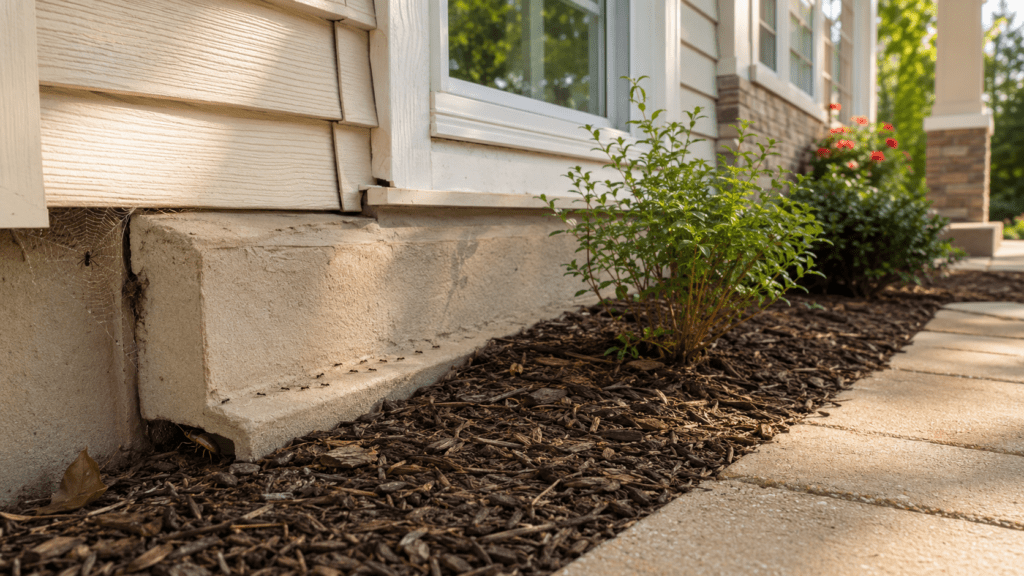
When ants, spiders, and other crawling pests appear inside a house, the visible insect is often only part of the problem. Pest activity commonly begins outside, where insects find food, moisture, shelter, and openings that lead toward the home.
What Is Perimeter Pest Control?
Perimeter pest control is an exterior treatment strategy designed to reduce pest activity around a house before insects move indoors. Treatment focuses on the foundation, common entry points, and exterior areas showing signs of activity. Rather than waiting for pests to appear in the living space, perimeter control addresses the pressure developing around the outside of the home.
How Perimeter Pest Control Works
The service creates a targeted line of defense between outdoor pest activity and the places insects commonly use to enter a house.
Evaluate the Exterior
A technician looks for active pests, webs, trails, moisture, shelter, vegetation, and openings that may support movement toward the house.
Target High-Risk Areas
Treatment is applied around the foundation and other exterior locations where pests are active or likely to approach the structure.
Reduce Pest Pressure
The objective is to reduce crawling insects near access points, making it less likely that they will establish recurring indoor activity.
MoShield’s Perimeter Pest Control service is built around this exterior-first approach, targeting crawling pests where they gather and approach the home.
What Pests Does Perimeter Control Target?
Perimeter pest control primarily focuses on crawling insects and other pests that move along the ground, foundation, siding, and structural entry points. The exact pests treated can depend on the service area and local conditions.
Ants
Trails may develop around foundations, windows, doors, plumbing lines, and areas offering food or moisture.
Spiders
Webs often appear near lights, windows, eaves, corners, and other areas where insect prey is available.
Cockroaches
Some species can approach from exterior hiding areas, drains, mulch, debris, utility openings, or attached structures.
Scorpions
In applicable regions, scorpions may shelter beneath debris, landscaping materials, rocks, and structural gaps.
Different pests behave differently, so identifying what is active around the property matters. Homeowners dealing with recurring trails can review MoShield’s ant-control information, while frequent webs or indoor sightings may point to conditions covered in its spider-control resources.
Because service availability and target pests can vary, homeowners should confirm the options offered by their local MoShield provider.
What Areas Are Treated Around the Home?
Application is concentrated where pests gather, travel, hide, or cross into the structure.
Foundation line: The area where the structure meets the ground is a major travel route for crawling insects.
Doors and windows: Gaps, damaged seals, screens, and frame openings can provide direct access indoors.
Eaves and roofline transitions: Protected corners and overhangs can support webs, nests, and other pest activity.
Utility entry points: Openings around pipes, cables, vents, and HVAC lines can serve as transition routes.
Garages and attached spaces: Garage doors, shared walls, and stored materials can create protected pest pathways.
Areas showing activity: Trails, webs, droppings, nesting material, and recurring sightings help guide a more targeted application.
Treatment does not necessarily mean spraying every visible exterior surface. The technician’s evaluation helps determine where activity and access are most likely, allowing the service to focus on higher-risk areas.
How Is Exterior Pest Control Different From Indoor Treatment?
Indoor treatment responds to pest activity that has already crossed into the living space. Exterior perimeter control is intended to reduce the activity and access conditions that allow pests to reach that point.
These approaches can work together. Cleaning indoor trails, removing visible pests, and sealing openings remain useful steps. However, when the outdoor source remains active, indoor-only responses may become a repeating cycle.
When Should Perimeter Pest Control Begin?
Starting before pest pressure becomes established can provide a stronger preventive position.
MoShield generally recommends beginning perimeter treatments in early spring, as warming temperatures increase insect movement and activity. Treatments commonly continue through the active season at intervals of approximately 60 to 75 days, although timing may vary by climate, pest pressure, property conditions, and local service plan.
Spring is not the only important period. Heavy rain can disturb nesting areas, hot and dry weather can increase the search for water, and cooler fall temperatures can push pests toward protected shelter. A home may therefore experience different types of exterior pressure throughout the year.
Why Recurring Visits Matter
Pest activity changes as weather, moisture, vegetation, and insect populations change. Recurring visits allow the exterior strategy to be adjusted as new pressure areas develop.
Waiting until pests are already established indoors can make the problem more disruptive. An early, recurring approach is designed to interrupt activity closer to the exterior source.
What Happens During a Perimeter Pest Control Visit?
The exact process may vary by provider and property, but a typical visit centers on evaluation, targeted application, and identifying exterior conditions that could continue supporting pest activity.
Review Current Activity
Let the technician know where pests, trails, webs, or recurring entry have been noticed.
Inspect the Perimeter
The exterior is checked for activity, access points, shelter, moisture, vegetation, and other pest-supporting conditions.
Treat Target Areas
Treatment is applied to the foundation, entry areas, and locations showing active or likely pest movement.
Discuss Contributing Conditions
The technician may point out gaps, moisture, debris, vegetation, or other conditions the homeowner can address between visits.
What Homeowners Can Do to Support Perimeter Control
Professional treatment works best when the property does not continually provide pests with easy access, water, food, and shelter.
Seal appropriate gaps: Repair screens, replace worn weatherstripping, and close openings around windows, doors, pipes, cables, and the foundation.
Manage moisture: Repair leaks, improve drainage, clean gutters, and address damp areas near the structure.
Trim vegetation: Keep branches, vines, shrubs, and dense ground cover from creating concealed routes against the house.
Move debris and firewood: Store firewood away from the foundation and remove leaf piles, boards, containers, and clutter that provide shelter.
Reduce insect-attracting conditions: Clean food residue, secure trash, limit standing water, and consider how exterior lighting may draw insects toward doors and windows.
Report recurring activity: Note where pests return and share those observations during the next visit so the treatment can respond to changing pressure.
Homeowners should also follow any preparation, drying-time, reentry, pet, or post-treatment instructions provided by the local technician.
Does Perimeter Pest Control Keep Every Bug Out?
No pest-control service can make a property completely insect-free. Bugs are part of the outdoor environment, and new activity can be introduced by changing weather, landscaping, deliveries, neighboring properties, and openings in the structure.
The realistic objective is reduction: fewer pests active near the house, less pressure around common entry points, and fewer indoor encounters over time. Results can depend on the pest involved, the size of the population, the condition of the home, weather, and whether contributing conditions are corrected.
The Best Measure of Success
Look for a sustained reduction in trails, webs, sightings, and recurring activity—not a promise that no insect will ever reach the property again.
If activity continues in the same location, that information is useful. It may reveal an overlooked entry point, nesting area, moisture source, or structural condition that needs additional attention.
Questions About Perimeter Pest Control
How Often Should Perimeter Pest Control Be Applied?
MoShield perimeter programs commonly recommend treatments approximately every 60 to 75 days beginning in early spring. The exact schedule may vary based on climate, local pest activity, property conditions, and the service plan offered in your area.
Is Perimeter Pest Control Applied Inside the House?
Perimeter pest control is primarily an exterior service. It focuses on reducing pest activity around the structure before insects enter. Ask the local provider what options are available if an established indoor infestation also needs attention.
What Is the Best Time of Year to Start?
Early spring is generally a useful time to begin because insect activity increases as temperatures rise. However, treatment may still be valuable later in the season when rain, heat, dryness, or cooler weather changes pest movement.
Does Rain Affect Perimeter Pest Control?
Weather can affect application timing, drying, and pest activity. The local technician can determine whether conditions are appropriate for service and provide any instructions following treatment.
Do I Still Need to Seal Cracks and Remove Debris?
Yes. Treatment can reduce exterior pest pressure, but exclusion and property maintenance remove the access and shelter conditions that help pests return. Sealing gaps, managing moisture, trimming vegetation, and moving debris can strengthen the overall prevention plan.
How Do I Know Whether Perimeter Pest Control Is Available Near Me?
Service availability can vary by location. Use MoShield’s location finder to connect with a local provider and confirm which pests and perimeter-control options are available in your area.
Reduce Pest Pressure Before Bugs Move Indoors
MoShield targets exterior activity and common access areas to help keep ants, spiders, and other crawling pests on the outside of the home.
Target pests, treatment schedules, and service availability may vary by location.


