
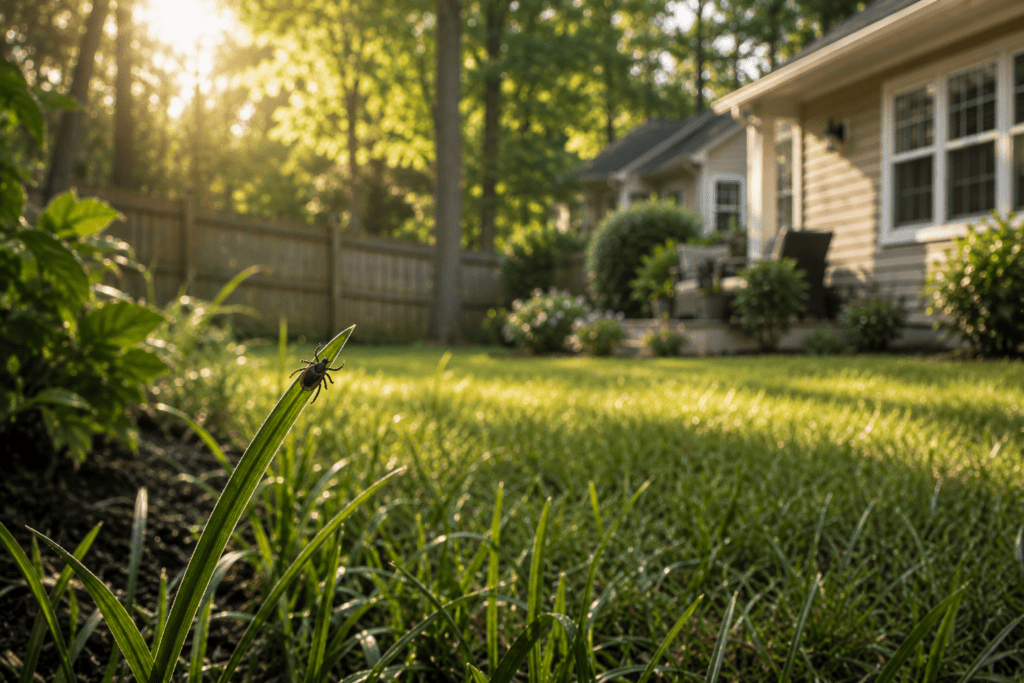
Why Tick Activity Is Expanding Into Residential Areas
Ticks move through environments using wildlife, pets, and natural ground cover. As suburban neighborhoods continue expanding closer to wooded areas and undeveloped land, tick activity often spreads closer to homes as well. Conditions that commonly contribute to residential tick activity include:
- Wooded property edges
- Deer and wildlife movement
- Dense landscaping and tall grass
- Moist shaded environments
- Pets moving through untreated areas
These conditions create protected spaces where ticks can remain active for long periods of time.

Ticks Thrive In Shaded Protected Areas
Ticks are sensitive to heat and dry conditions. They survive best in shaded areas that retain moisture and ground cover. Common residential tick zones include:
- Fence lines
- Leaf piles
- Wood lines
- Mulch beds
- Overgrown landscaping
Because many of these areas blend naturally into a yard, homeowners often do not notice tick buildup until activity becomes more obvious.
Why Mild Winters Can Increase Tick Activity
Tick populations are heavily influenced by weather conditions. Mild winters and early warm temperatures can allow ticks to remain active longer and expand more aggressively into surrounding environments. That is one reason many homeowners feel like ticks are appearing earlier in the season than they remember in previous years.
What Homeowners Can Do To Reduce Tick Risk
A few simple property changes can help reduce tick-friendly conditions:
- Keep grass trimmed
- Reduce heavy leaf buildup
- Limit overgrowth near gathering areas
- Monitor shaded pet pathways
- Pay attention to fence lines and wooded edges
These steps help reduce favorable conditions, but nearby environmental pressure can still continue contributing to tick activity.
How Professional Tick Control Helps
Professional tick control focuses on reducing tick activity in the protected areas where ticks tend to survive and spread. Treatments usually target shaded edges, overgrowth, wooded borders, and other high-risk areas around the property. The goal is reducing overall tick pressure enough to make outdoor areas safer and more manageable throughout the season.
Explore more:


