Mid Central NJ

Pet Safety and Mosquito Season Awareness in Mid Central New Jersey

The Impact of Mid Central New Jersey's Climate

To effectively protect pets, it is necessary to understand how the Mid Central New Jersey climate dictates the lifecycle and prevalence of local mosquito populations. Unlike arid regions or northern climates with brief summer windows, the convergence of coastal and continental weather patterns here creates a prolonged and intense season.
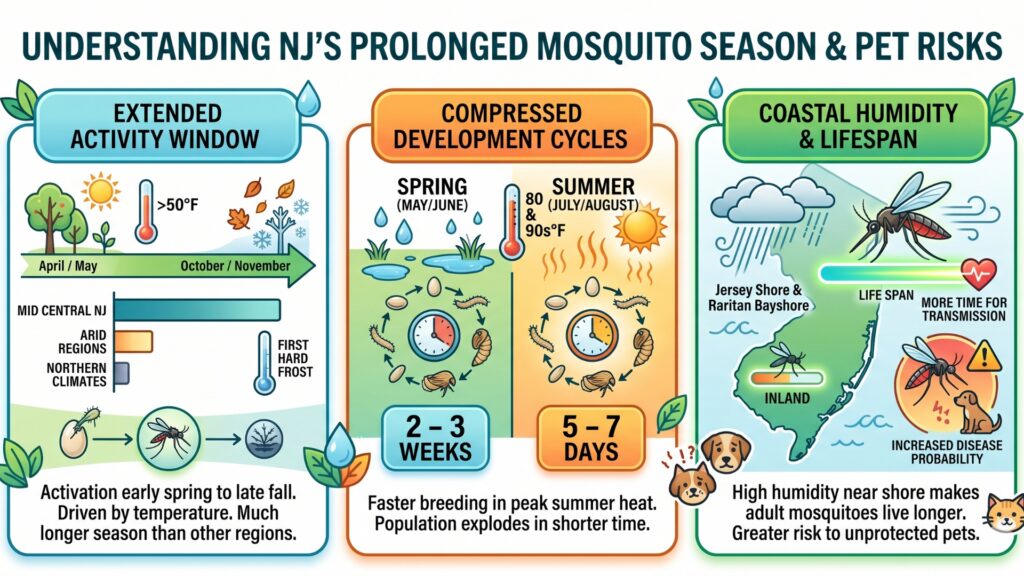
  • Extended Activity Window: Mosquitoes in New Jersey break dormancy when temperatures consistently cross the 50°F threshold. In the mid-central counties, this activation typically occurs in late April or early May, with active populations persisting until the first hard frost in late October or November.
  • Compressed Development Cycles: Spring rainfall in May and June establishes the initial breeding habitats. However, as summer temperatures climb into the 80s and 90s, the mosquito development cycle accelerates. What takes two to three weeks in the spring can compress to just 5 to 7 days in July and August.
  • Coastal Humidity and Lifespan: The high humidity characteristic of areas near the Jersey Shore and the Raritan Bayshore significantly extends the lifespan of adult mosquitoes. Longer lifespans mean more active adults feeding simultaneously, increasing the statistical probability of disease transmission to unprotected pets.
Mid Central NJ Mosquito Shield 2026 season graphic

Dominant Mosquito Species

Mid Central New Jersey is home to over 60 mosquito species, but a select few pose the greatest risk to residential pets. The primary veterinary threat transmitted by these mosquitoes is Heartworm Disease (Dirofilaria immitis).

The Asian Tiger Mosquito (Aedes albopictus)

  • Behavior: Unlike traditional mosquitoes that feed at dusk, the Asian Tiger Mosquito is a highly aggressive daytime biter.
  • Habitat: They are container-breeders, thriving in the dense suburban neighborhoods of Middlesex and Monmouth counties. They require only a bottle cap of water to breed and rarely travel more than 100 to 300 feet from their hatching site.
  • Pet Risk: Because they are active during peak daytime hours when dogs are most likely to be playing in the yard, they present a constant transmission risk for heartworm and cause severe dermatological reactions (pruritus) at the bite site.

The Northern House Mosquito (Culex pipiens) and Salt Marsh Mosquito (Culex salinarius)
  • Behavior: Both Culex species are active primarily from dusk to dawn.
  • Habitat: Culex pipiens breeds heavily in stagnant, organic-rich water such as clogged gutters or storm drains. Culex salinarius is adapted to the coastal wetlands of Ocean and Monmouth counties but has a travel range of up to 5 miles, allowing it to easily push into inland residential zones.
  • Pet Risk: These species frequently target sleeping or resting animals during the evening and are known bridge vectors for various pathogens.
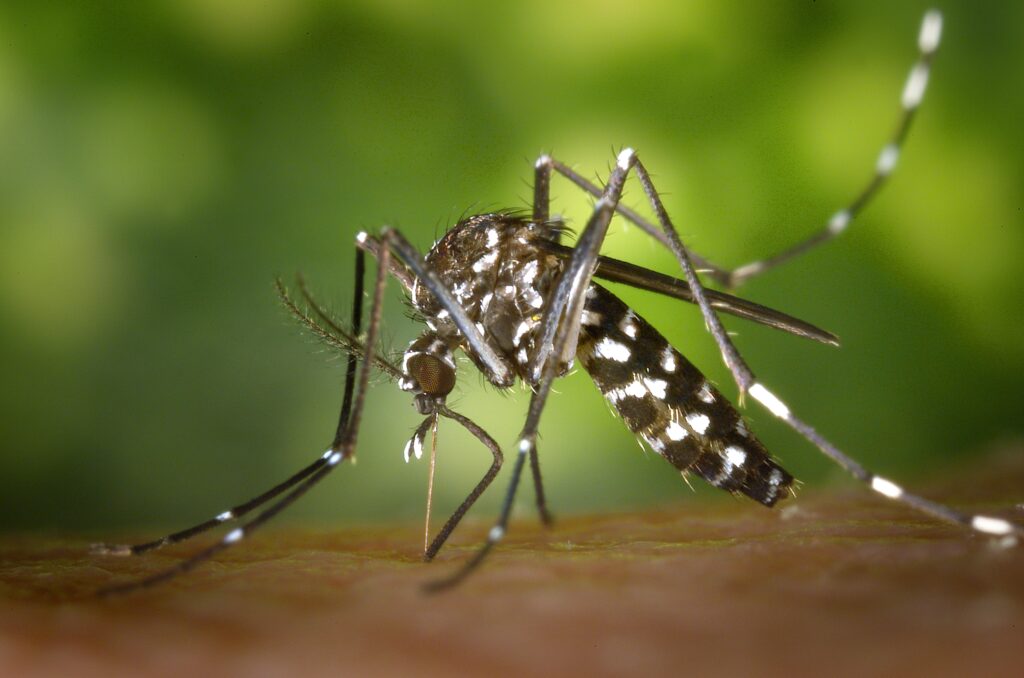
Aedes albopictus (Asian Tiger Mosquito)

3 easy steps to backyard bliss

Win the backyard battle this year.

    Do you agree to receive text messages from Mosquito Master LLC dba Mosquito Shield of MCNJ sent from 732-524-8922? Message frequency may vary. Standard messaging and data rates apply. Text STOP to opt-out at any time. Text HELP for support or contact us. Privacy Policy/TOS.
    Yes, I agree to receive informational and/or marketing text messages from 732-524-8922
    No, I do not want to receive text messages from Mosquito Shield.

    See our Privacy Policy/TOS for details on how we handle your information.

    1. 1

      Request Your Free Quote

      We’re out to kill mosquitoes, not your budget. We’ll be upfront about all costs, and you’ll know exactly what payments will look like before you start. Speak to one of our professionals today about getting a quote for your property.
    2. 2

      Schedule Your Service

      Once you’ve received a quote, you can move forward and begin seeing a difference with our services. Any mosquitoes in the area will be killed on contact and a barrier created to deter new mosquitoes from coming in. It takes less than 48 hours to notice a difference.
    3. 3

      Get Back Outside

      You no longer have to wonder what life would be like without mosquitoes. Go back to enjoying any and all outdoor activities without unwanted guests. Taking care of mosquitoes on your property has never been easier.
    Ready To Get Started?
    Buy Now

    Actionable Environmental and Preventative Strategies

    Safeguarding pets in this region requires a dual approach: managing the immediate yard environment and adhering to veterinary protocols.

    Suburban and Coastal Source Reduction

    Because species like the Asian Tiger Mosquito breed directly in residential yards, interrupting the water cycle is the most effective environmental control.

    • Empty and wipe down outdoor pet water bowls daily to remove attached eggs.
    • Routinely drain children’s toys, wheelbarrows, corrugated drainage pipes, and plant saucers after summer thunderstorms.
    • Ensure gutters are cleared of debris, as decaying organic matter mixed with standing water is the preferred breeding ground for Culex pipiens.

    Veterinary Preventative Care

    Due to the extended 7-to-8 month mosquito season in New Jersey, veterinary professionals strongly advocate for continuous, year-round heartworm prevention.

    • Warning on Human Repellents: Do not apply human insect repellents (especially those containing DEET) to dogs or cats, as they are highly toxic. Furthermore, many “natural” botanical oils can cause neurological distress in pets. Always rely on EPA-approved, pet-specific preventatives prescribed by a veterinarian.

    Adjusting Outdoor Routines

    • Given the prevalence of aggressive daytime biters (Aedes) and evening feeders (Culex), ensure that window and door screens are fully intact to protect indoor pets.
    • Keep pets indoors during peak dusk hours when mosquito density is highest, particularly in neighborhoods adjacent to wooded areas or coastal marshes.
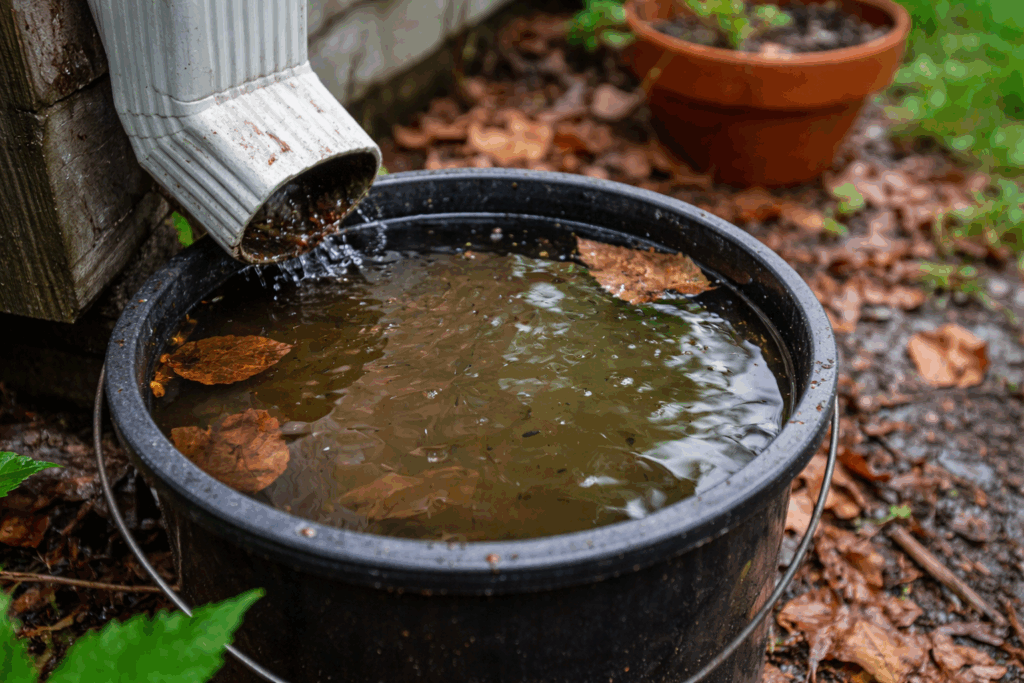
    standing water near home where mosquitoes can breed

    Frequently Asked Questions

    01. What other insects will this affect?
    We use a control product so other insects present when and where we spray may be impacted.

    However, our formula was specifically engineered for mosquitoes so it won’t repel any other insects as it does mosquitoes.
    02. Will your product work after storms?
    Yes, we have specifically engineered our formula to outlast storms. With a special polymer layer that provides weather resistance, our formula will remain effective.
    03. Is there any environment you cannot treat?
    Yes, there are some areas we won’t spray to avoid the surrounding environments. Pools, natural water sources, vegetable gardens, and artificial water sources complete the list.

    Because water could easily spread the insecticides, we never directly apply our product to it. However, the rest of the property can still be sprayed and it will drastically reduce the population of mosquitoes.
    04. Does this product work on all mosquitoes and ticks ?
    Yes, we target aspects of mosquitoes and ticks that don’t change from species to species.

    The killing and repelling aspects of our product will work on any species of mosquitoes and ticks .
    05. What about my children and pets?
    Pets and children should be inside during each application. However, they can re-enter the property once the product has dried, roughly 10-15 minutes. At that point, there are no restrictions until the next application.
    06. When can I start to see the effects?
    Every yard is different but you should notice a dramatic reduction within 24-48 hours of the initial spray.

    With each subsequent treatment, the results continue to improve, allowing you to enjoy time outside without being chased in by swarms of mosquitoes.
    07. Why do we see more mosquitoes after it has rained?
    Mosquitoes are more abundant after it rains because standing water is where they breed.

    Adult, female mosquitoes will lay their eggs in water. Once fully submerged, the countdown begins and the eggs can hatch in as little as a few days.

    Shield Your Yard Now