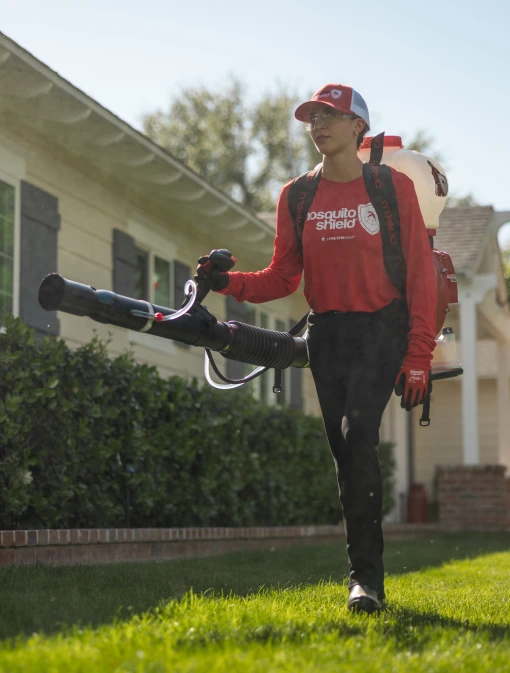
Downtown Atlanta

West Nile Virus Risk in Downtown Atlanta

Local Risk and How West Nile Virus Spreads

Downtown Atlanta has the mix of dense development, shaded green spaces, storm drains, planters, construction areas, and pockets of standing water that can support mosquito breeding after rain. Georgia health officials track West Nile virus activity, and the Georgia Department of Public Health reported increasing West Nile virus infections in the state during the 2026 season.

West Nile virus is maintained in nature through a cycle involving mosquitoes and birds. Mosquitoes become infected when they feed on infected birds, and those mosquitoes can later spread the virus when they bite people or animals. Humans, dogs, cats, and horses are not the main source of continued spread; they are generally considered incidental or “dead-end” hosts because they usually do not develop enough virus in the bloodstream to infect new mosquitoes.

For Downtown Atlanta residents, risk is often highest around dusk and dawn, in courtyards, outdoor dining areas, alleyways, parking structures, and residential properties where water collects in containers, gutters, drains, fountains, or low spots. Pets can be bitten by infected mosquitoes just like people, although dogs and cats rarely become seriously ill compared with birds and horses.
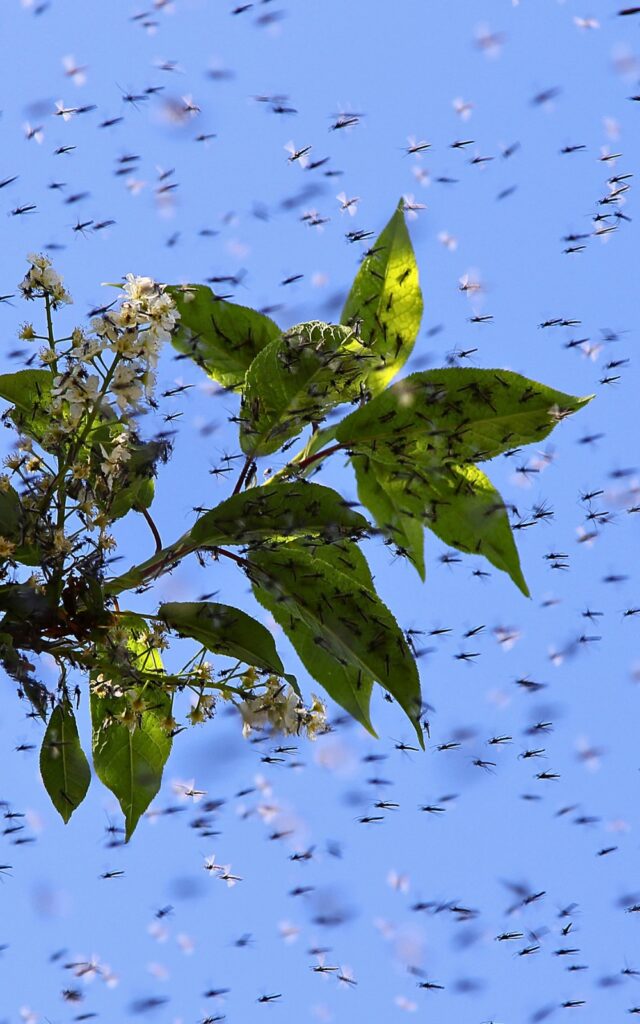
Swarm of Mosquitos Mosquito Shield mobile

West Nile Virus Symptoms, Health Effects, and Treatment

Most people infected with West Nile virus do not develop symptoms. When illness does occur, symptoms may include fever, headache, body aches, joint pain, vomiting, diarrhea, or rash. A smaller number of people develop serious illness affecting the nervous system, including meningitis or encephalitis, which can lead to confusion, weakness, tremors, vision changes, paralysis, hospitalization, long-term complications, or death. People over 60 and those with certain medical conditions are at higher risk for severe disease.

There is no specific medicine or licensed human vaccine to cure or prevent West Nile virus disease. Mild cases are usually managed with rest, fluids, and over-the-counter pain relief as directed by a healthcare provider, while severe cases may require hospitalization, IV fluids, respiratory support, pain control, and nursing care.

Pets that seem unusually weak, disoriented, feverish, unsteady, or neurologic after mosquito exposure should be evaluated by a veterinarian. Horse owners should be especially proactive because horses are more vulnerable to serious West Nile disease, and vaccination guidance should be discussed with a veterinarian.

For Downtown Atlanta homeowners and property managers, reducing mosquito breeding sites and protecting people and pets from bites are the most practical ways to lower West Nile virus risk.
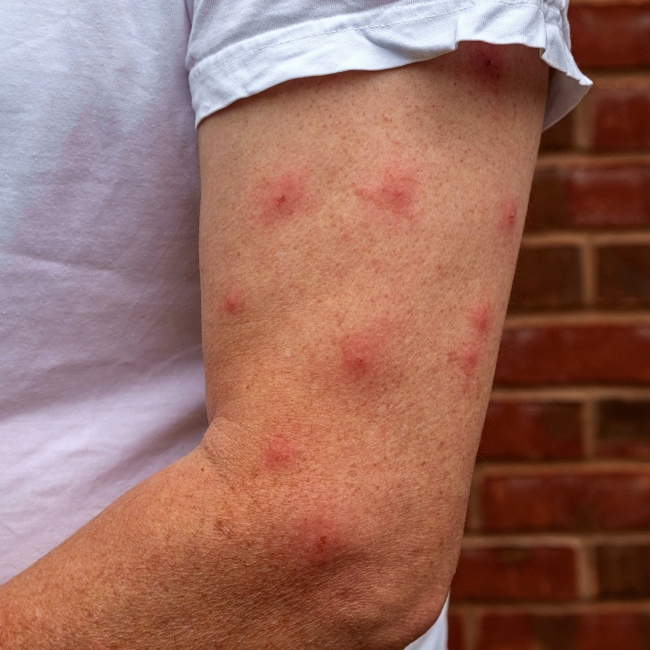
Mosquito Bites during the day Mosquito Shield

3 easy steps to backyard bliss

Win the backyard battle this year.

    Do you agree to receive text messages from Heaton Mosquito Control Inc dba Mosquito Shield of Downtown Atlanta sent from 678-664-3040? Message frequency may vary. Standard messaging and data rates apply. Text STOP to opt-out at any time. Text HELP for support or contact us. Privacy Policy/TOS.
    Yes, I agree to receive informational and/or marketing text messages from 678-664-3040
    No, I do not want to receive text messages from Mosquito Shield.

    See our Privacy Policy/TOS for details on how we handle your information.

    1. 1

      Request Your Free Quote

      We’re out to kill mosquitoes, not your budget. We’ll be upfront about all costs, and you’ll know exactly what payments will look like before you start. Speak to one of our professionals today about getting a quote for your property.
    2. 2

      Schedule Your Service

      Once you’ve received a quote, you can move forward and begin seeing a difference with our services. Any mosquitoes in the area will be killed on contact and a barrier created to deter new mosquitoes from coming in. It takes less than 48 hours to notice a difference.
    3. 3

      Get Back Outside

      You no longer have to wonder what life would be like without mosquitoes. Go back to enjoying any and all outdoor activities without unwanted guests. Taking care of mosquitoes on your property has never been easier.

    Frequently Asked Questions

    01. What other insects will this affect?
    We use a control product so other insects present when and where we spray may be impacted.

    However, our formula was specifically engineered for mosquitoes so it won’t repel any other insects as it does mosquitoes.
    02. Will your product work after storms?
    Yes, we have specifically engineered our formula to outlast storms. With a special polymer layer that provides weather resistance, our formula will remain effective.
    03. Is there any environment you cannot treat?
    Yes, there are some areas we won’t spray to avoid the surrounding environments. Pools, natural water sources, vegetable gardens, and artificial water sources complete the list.

    Because water could easily spread the insecticides, we never directly apply our product to it. However, the rest of the property can still be sprayed and it will drastically reduce the population of mosquitoes.
    04. Does this product work on all mosquitoes and ticks ?
    Yes, we target aspects of mosquitoes and ticks that don’t change from species to species.

    The killing and repelling aspects of our product will work on any species of mosquitoes and ticks .
    05. What about my children and pets?
    Pets and children should be inside during each application. However, they can re-enter the property once the product has dried, roughly 10-15 minutes. At that point, there are no restrictions until the next application.
    06. When can I start to see the effects?
    Every yard is different but you should notice a dramatic reduction within 24-48 hours of the initial spray.

    With each subsequent treatment, the results continue to improve, allowing you to enjoy time outside without being chased in by swarms of mosquitoes.
    07. Why do we see more mosquitoes after it has rained?
    Mosquitoes are more abundant after it rains because standing water is where they breed.

    Adult, female mosquitoes will lay their eggs in water. Once fully submerged, the countdown begins and the eggs can hatch in as little as a few days.

    Shield Your Yard Now