Wake County

Common Tick Species in Wake County

Identifying Wake County's Most Common Ticks

Wake County’s combination of warm temperatures, high humidity, and dense suburban vegetation makes it one of the most active tick regions in the Southeast. Understanding the local tick population, their preferred habitats, and how climate variations impact their life cycles is essential for mitigating risk in residential environments.

Lone Star Tick (Amblyomma americanum)

Identification: Adult females are easily identified by a distinct white dot or “lone star” on their back. Males feature mottled reddish-brown markings.

Behavior & Habitat: Found in heavily wooded areas with dense underbrush. Unlike most species that wait passively for a host, the Lone Star tick is notoriously aggressive and will actively move toward carbon dioxide and vibrations.

Disease Risk: The primary vector for Ehrlichiosis and the pathogen responsible for Alpha-gal syndrome, a condition that triggers a severe allergy to mammalian meat.
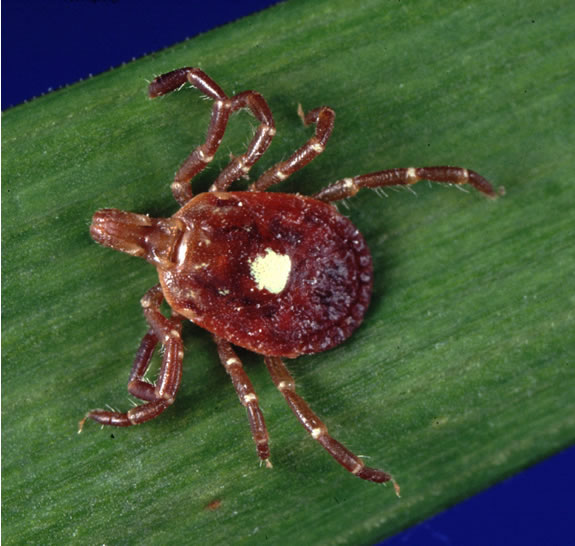
Lone Star Ticks

American Dog Tick (Dermacentor variabilis)

Identification: Noticeably larger than other local species. Both sexes have dark brown bodies with varying degrees of white or yellowish mottling.

Behavior & Habitat: Prefers tall, unmanaged grasses, overgrown foliage, and the edges of walking trails. They are highly resilient to temperature fluctuations.

Disease Risk: The principal carrier of Rocky Mountain spotted fever (RMSF) and Tularemia in the Southeast.
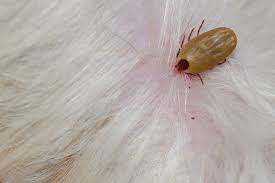
dog tick

Blacklegged Tick / Deer Tick (Ixodes scapularis)

Identification: Smaller than the dog ticks, with distinctly black legs contrasting against a dark brown scutum (shield). Adult females have a reddish-orange lower abdomen.

Behavior & Habitat: Heavily reliant on moisture; they thrive in deciduous forests and damp leaf litter.

Disease Risk: The primary vector for Lyme disease and Babesiosis.
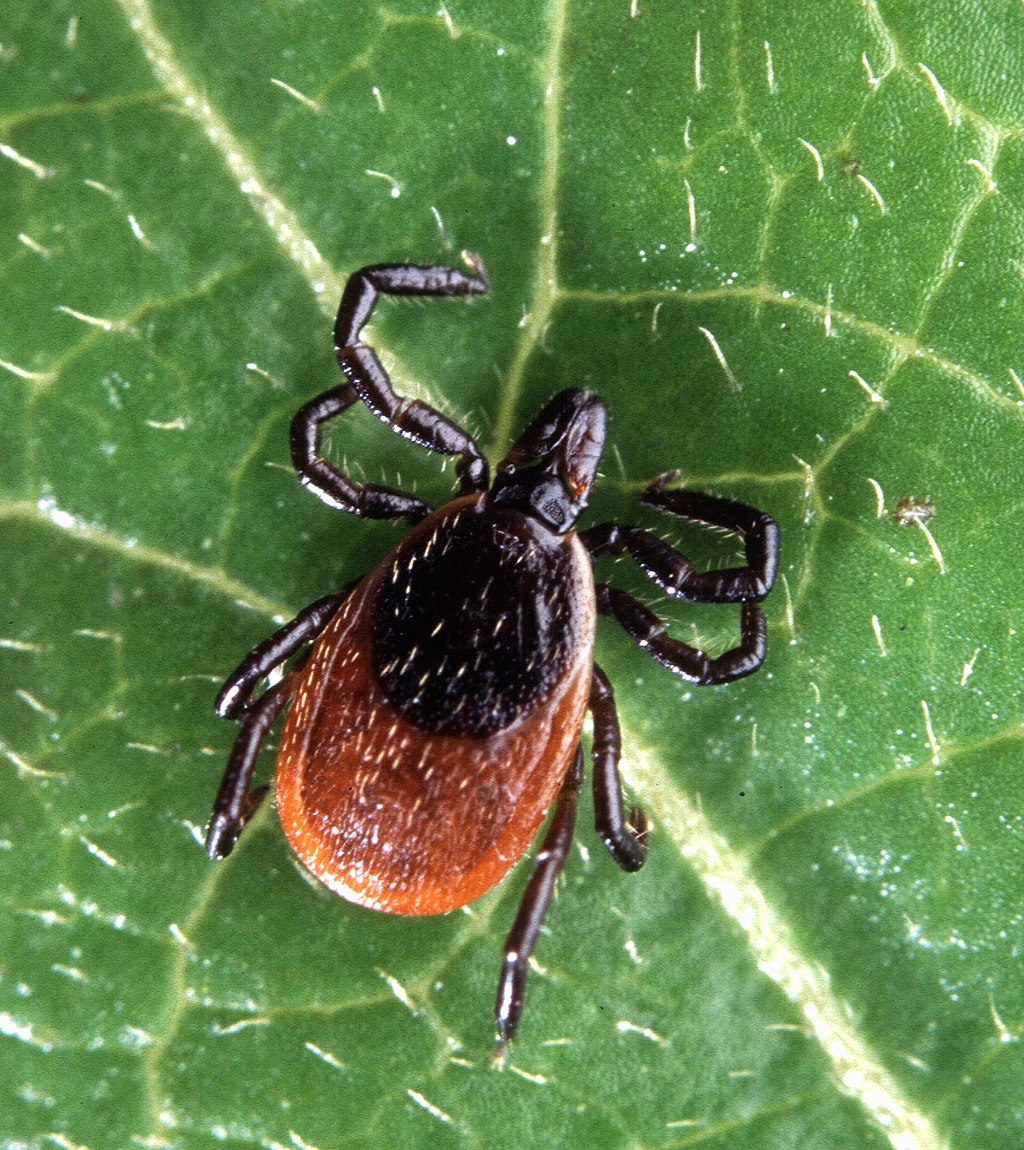
Deer Ticks (Black-legged Ticks)

3 easy steps to backyard bliss

Win the backyard battle this year.

    Do you agree to receive text messages from Kand K Futures, Inc dba Mosquito Shield of Wake County, NC sent from 919-561-5554 ? Message frequency may vary. Standard messaging and data rates apply. Text STOP to opt-out at any time. Text HELP for support or contact us. Privacy Policy/TOS.
    Yes, I agree to receive informational and/or marketing text messages from 919-561-5554
    No, I do not want to receive text messages from Mosquito Shield.

    See our Privacy Policy/TOS for details on how we handle your information.

    1. 1

      Request Your Free Quote

      We’re out to kill mosquitoes, not your budget. We’ll be upfront about all costs, and you’ll know exactly what payments will look like before you start. Speak to one of our professionals today about getting a quote for your property.
    2. 2

      Schedule Your Service

      Once you’ve received a quote, you can move forward and begin seeing a difference with our services. Any mosquitoes in the area will be killed on contact and a barrier created to deter new mosquitoes from coming in. It takes less than 48 hours to notice a difference.
    3. 3

      Get Back Outside

      You no longer have to wonder what life would be like without mosquitoes. Go back to enjoying any and all outdoor activities without unwanted guests. Taking care of mosquitoes on your property has never been easier.

    How Climate and Seasonality Drive Tick Activity

    Ticks do not die off in the winter; they merely enter a state of dormancy (diapause) during freezing temperatures. Wake County’s climate variations create distinct seasonal shifts in behavior.

    Spring (March – May)

    Spring moisture and rising temperatures trigger the emergence of nymphs (immature ticks). Nymphs are particularly dangerous from a public health standpoint because they are the size of a poppy seed, making them incredibly difficult to detect on skin or in hair, yet they are fully capable of transmitting pathogens.

    • Activity Focus: Lone Star and American Dog tick nymphs begin actively seeking their first blood meals in suburban yards and parks.

    Summer (June – August)

    High summer humidity in the Raleigh area helps ticks retain critical body moisture. During extended dry spells, ticks migrate away from direct sunlight into shaded, damp microclimates to avoid desiccation.

    • Activity Focus: Adult tick activity peaks. Habitats like dense ground cover and transition zones between mowed lawns and wooded borders become high-risk areas.

    Fall and Winter (September – February)

    Warm autumns keep adult ticks active well into October and November. The Blacklegged (Deer) tick uniquely prefers cooler temperatures and remains highly active throughout the fall and early spring, “questing” for hosts on any day the temperature rises above freezing.
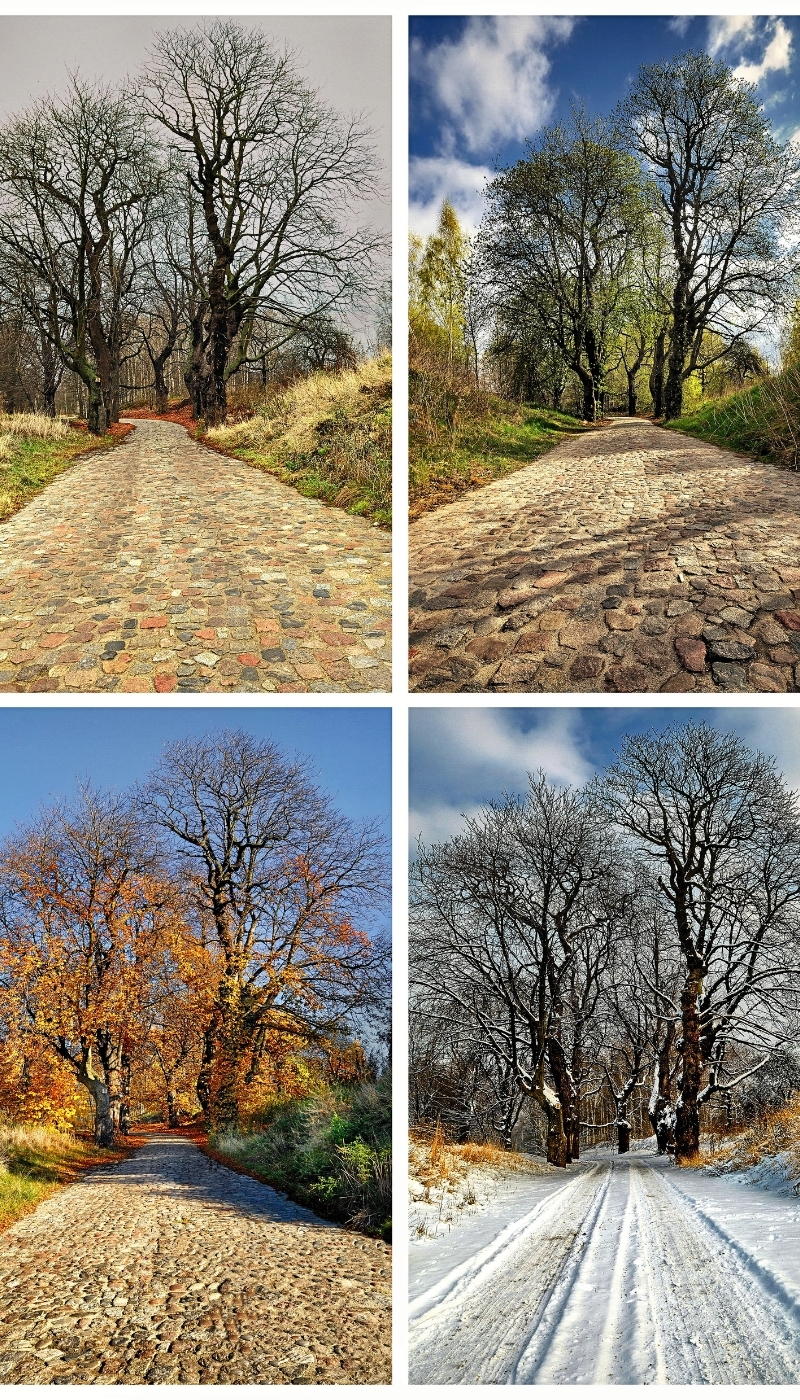

    Weather impact to mosquito populations seasonal perspective East Coast photo vertical layout

    Frequently Asked Questions

    01. What other insects will this affect?
    We use a control product so other insects present when and where we spray may be impacted.

    However, our formula was specifically engineered for mosquitoes so it won’t repel any other insects as it does mosquitoes.
    02. Will your product work after storms?
    Yes, we have specifically engineered our formula to outlast storms. With a special polymer layer that provides weather resistance, our formula will remain effective.
    03. Is there any environment you cannot treat?
    Yes, there are some areas we won’t spray to avoid the surrounding environments. Pools, natural water sources, vegetable gardens, and artificial water sources complete the list.

    Because water could easily spread the insecticides, we never directly apply our product to it. However, the rest of the property can still be sprayed and it will drastically reduce the population of mosquitoes.
    04. Does this product work on all mosquitoes and ticks ?
    Yes, we target aspects of mosquitoes and ticks that don’t change from species to species.

    The killing and repelling aspects of our product will work on any species of mosquitoes and ticks .
    05. What about my children and pets?
    Pets and children should be inside during each application. However, they can re-enter the property once the product has dried, roughly 10-15 minutes. At that point, there are no restrictions until the next application.
    06. When can I start to see the effects?
    Every yard is different but you should notice a dramatic reduction within 24-48 hours of the initial spray.

    With each subsequent treatment, the results continue to improve, allowing you to enjoy time outside without being chased in by swarms of mosquitoes.
    07. Why do we see more mosquitoes after it has rained?
    Mosquitoes are more abundant after it rains because standing water is where they breed.

    Adult, female mosquitoes will lay their eggs in water. Once fully submerged, the countdown begins and the eggs can hatch in as little as a few days.

    Shield Your Yard Now