
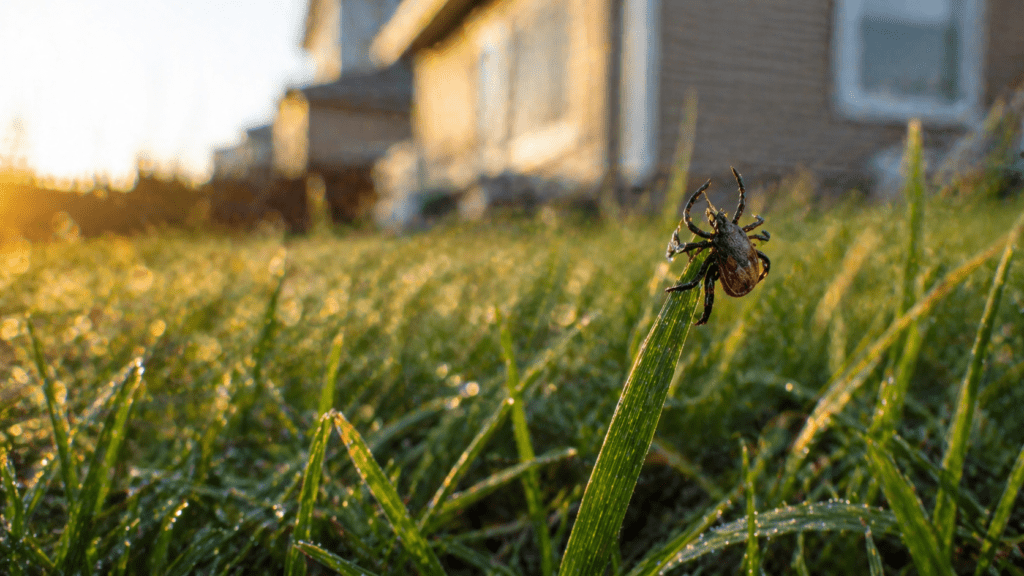
Why Tick Activity Feels Worse Right Now
Tick populations are heavily shaped by weather and environment. Mild winters, early warm temperatures, moisture, and wildlife movement can all create conditions that allow ticks to stay active longer and spread more easily.
When those conditions line up, homeowners tend to notice more tick activity in spring and early summer.

Where Ticks Build Up Around the Yard
Ticks do not spread evenly across a property. They usually gather in areas that hold shade, moisture, and cover. This often includes:
- Wooded edges and fence lines
- Tall grass and overgrown landscaping
- Leaf piles and damp soil
- Areas where pets or wildlife travel
If these spaces are left untreated, tick pressure can build quickly over time.
What Homeowners Can Do Right Away
A few simple steps can help reduce exposure:
- Keep grass trimmed
- Remove leaf piles and yard debris
- Cut back overgrowth near the home
- Pay attention to shaded areas pets use often
These steps can help, but they usually do not solve the problem on their own once tick activity is established.
How Professional Tick Control Helps
Professional tick control focuses on the areas where ticks actually live and move. That usually means targeting the shady, protected zones around the yard that support ongoing activity.
The goal is not perfection. The goal is reducing tick presence enough to make the property more usable and lower overall exposure through the season.
Why Early Action Matters
Once tick activity becomes noticeable, it is usually already established. Acting earlier gives homeowners a better chance to reduce the problem before it becomes more frustrating.
If ticks are already showing up around your yard, it may be time to put a plan in place before activity increases further.
Explore more:
Tick Control
Bugs We Battle
How to Prepare Your Yard for Winter Pest Control


