
Do Ticks Die In Winter?
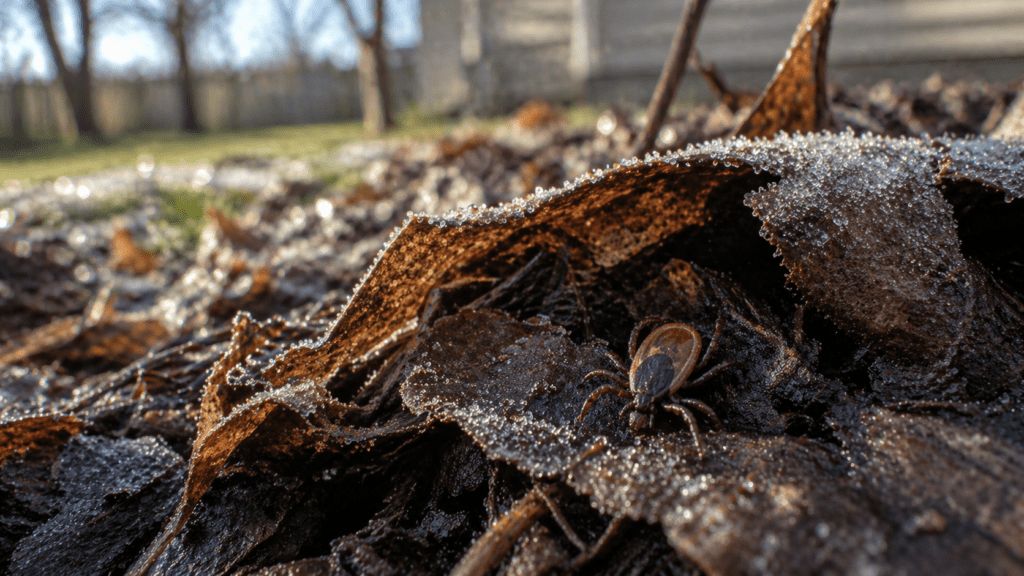
Cold weather can slow tick activity, but it does not always eliminate it. Ticks are resilient, and some can remain protected in leaf litter, brush, wooded edges, and other sheltered environments until temperatures rise again.
That means a cold season may reduce visibility without fully removing the problem.

Why Ticks Show Up Earlier Than Expected
Ticks do not need peak summer heat to become active. A few stretches of mild weather can be enough to get movement going again. This is why some homeowners notice tick activity before they feel mentally ready for “tick season.”
That early activity is one of the main reasons spring prevention matters.
What This Means For Homeowners
If tick control only starts after repeated sightings, the seasonal advantage is already reduced. Getting ahead of activity earlier can help lower the buildup that happens as the season develops.
This is especially important on properties with:
- Wooded borders
- Leaf-heavy landscaping
- Pets that spend time outdoors
- Shaded, damp areas around the yard
Why Early Treatment Helps
Early treatment gives homeowners a chance to reduce active tick pressure before the problem grows more visible. Professional tick control works best when it is treated as a seasonal system rather than a last-minute fix.
The goal is consistent reduction, not waiting until the issue feels overwhelming.
A Better Way To Think About Tick Season
Instead of asking when ticks fully disappear, it is usually better to ask when conditions allow them to return. In many yards, that answer comes earlier than most people think.
Explore more:
Tick Control
How to Prepare Your Yard for Winter Pest Control
Bugs We Battle


