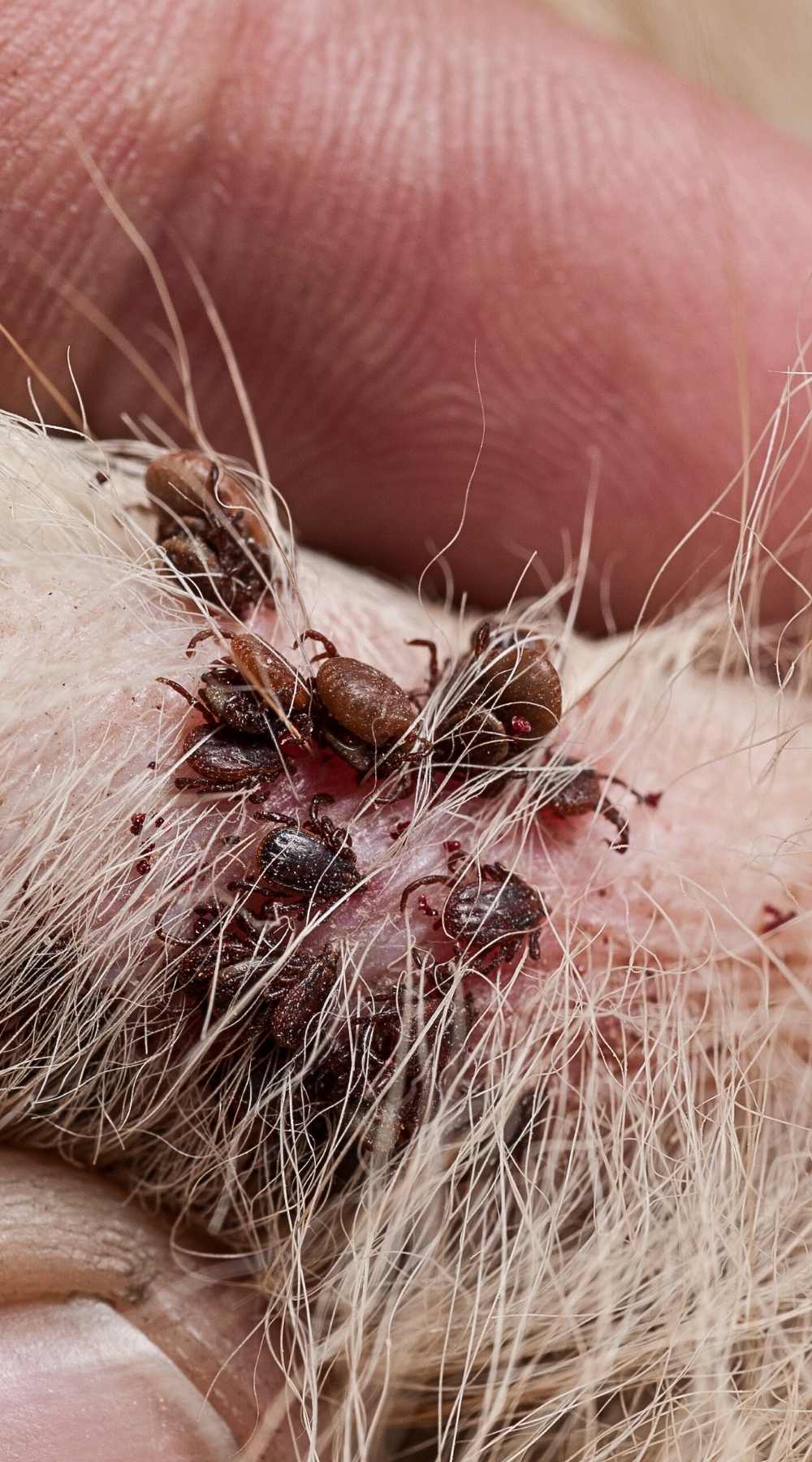
Strafford County’s wooded terrain, abundant wildlife, and humid seasonal climate create an environment where ticks are commonly encountered. Leaf litter, shaded ground cover, and a mix of suburban and rural landscapes provide ideal habitats for ticks to thrive. As residents spend time outdoors in yards, parks, and trails, encounters with ticks can occur from spring through fall — and sometimes during mild winter periods.

Also known as the deer tick, this species is widely established across New Hampshire.
Where they are found:
Wooded areas and forest edges
Leaf litter and shaded ground cover
Residential yards near tree lines
Seasonal activity:
Most active in spring and fall, with nymphs active in late spring and summer.
Regional relevance:
Primary vector of Lyme disease in the Northeast.

Where they are found:
Grassy fields and trails
Roadside vegetation
Overgrown residential areas
Seasonal activity:
Most active from late spring through summer.
Regional relevance:
Common in grassy environments and frequently encountered by pets and outdoor enthusiasts.
Increased Human and Pet Exposure
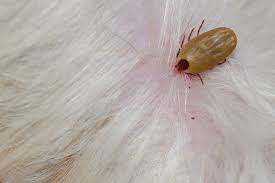
Outdoor recreation, yard work, and pet activity near wooded areas increase the likelihood of tick encounters.
Expanding Tick Ranges
Changing climate patterns have supported the expansion and persistence of tick populations across New England.
Suburban Habitat Overlap
Residential developments near wooded areas create ideal conditions for ticks close to homes.
Health Concerns
Ticks in the region are associated with illnesses that can affect both people and pets, making awareness important during outdoor activities.