Mosquito activity in this region fluctuates across three distinct seasonal phases:

The primary reason sporadic spraying fails is biology. A single female mosquito can lay up to 200 eggs at a time. If the interval between treatments exceeds the mosquito’s maturation cycle, a new generation will emerge, breed, and repopulate the property before the next application occurs.
To understand the necessity of a strict cadence, it is necessary to examine the two primary species active in Northwest Dallas:
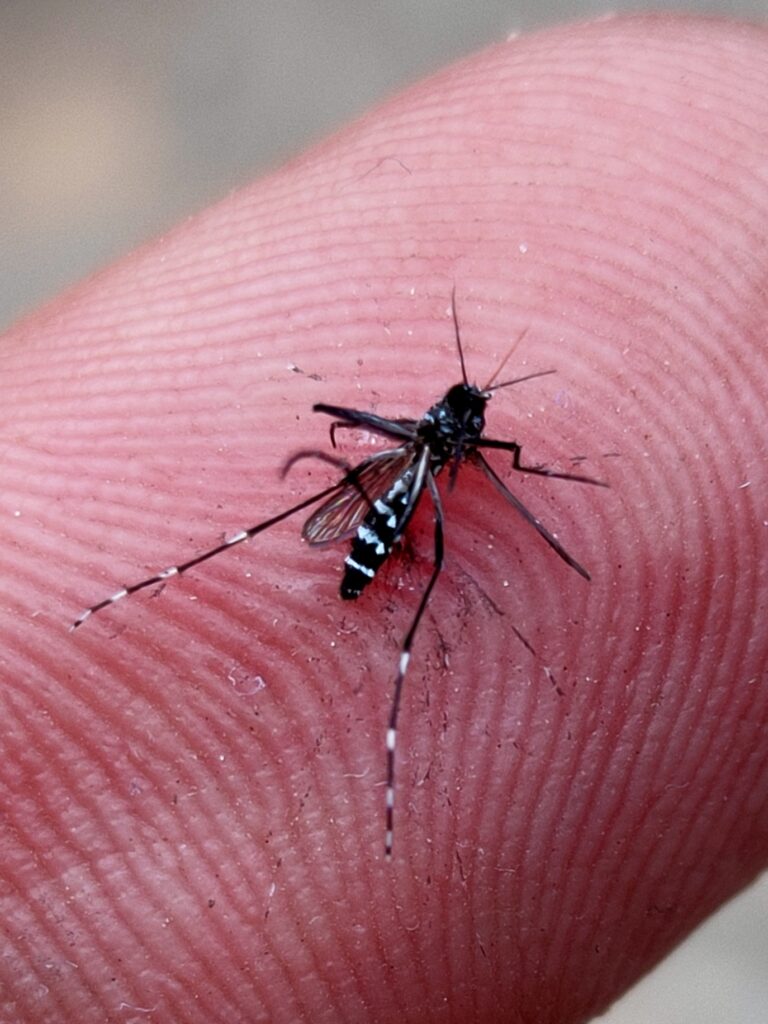
Optimal mosquito control requires more than simply applying product to a landscape; it requires a data-driven approach to timing. Mosquito Shield structures its treatment cadence around three core principles designed to outpace the mosquito lifecycle in North Texas.
Standard industry pest control often operates on a 30-day or bi-monthly schedule. In the peak heat of a Dallas summer, a 30-day gap is long enough for three distinct generations of mosquitoes to hatch and mature. Mosquito Shield utilizes a significantly tighter cadence—typically returning every 10 to 17 days. This aggressive scheduling ensures that treatments disrupt the breeding cycle before a new generation can fully mature and begin biting.
Mosquito activity is entirely dependent on environmental conditions. A rigid schedule that ignores the weather is inefficient. Mosquito Shield tracks local meteorological data, including rainfall, temperature spikes, and humidity levels in the Northwest Dallas area. If heavy rainfall accelerates the hatching cycle or dilutes standing water treatments, the cadence is dynamically adjusted to respond to the changing environmental pressure.
A correct cadence is only effective if it addresses multiple stages of the mosquito lifecycle simultaneously. By visiting a property at precise, recurring intervals, technicians can manage both:
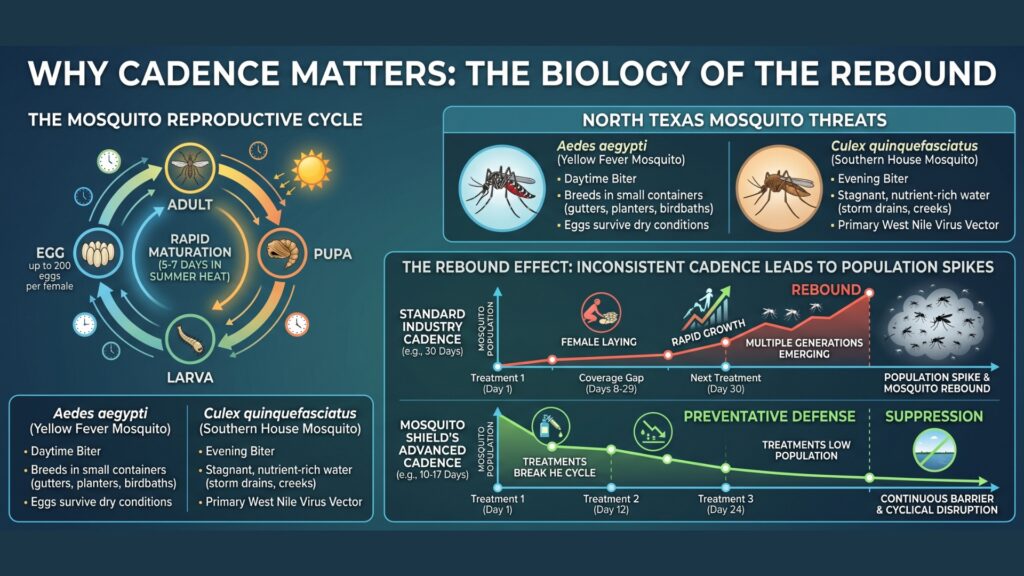
Maintaining a strict spraying cadence transforms mosquito control from a reactive measure into a proactive defense. By starting treatments early in the spring and maintaining a consistent, weather-adapted schedule through the late fall, the overall mosquito population on a property is systematically suppressed. This sustained approach prevents the exponential population spikes common in Northwest Dallas during July and August, ultimately providing a more stable and comfortable outdoor environment throughout the year.