
Greater Oklahoma City

Comprehensive Flea Ecology and Population Management: Oklahoma City

National Climate Comparison

  • Northern Transition Zones (e.g., Upper Midwest, New England): Hard freezes consistently terminate outdoor adult populations by late October, limiting active reproduction to 4–5 months.
  • Deep South / Gulf Coast: Flea lifecycles often remain active uninterrupted across 12 months due to subtropical humidity and absence of deep ground freezing.
  • Central Oklahoma (Transitional Plains): Features a 7- to 8-month active outdoor window. The region’s dense Permian red clay soils retain sub-surface moisture beneath landscaped canopies, while extreme surface heat drives larvae into sheltered, organic-rich perimeter zones rather than killing off the population.
Oklahoma City Mosquito Shield 2026 Season Forecast mobile

Species Profiles in Oklahoma City

While hundreds of siphonapteran species exist globally, domestic infestations and urban perimeter risks in Oklahoma City are driven primarily by two species:

The Cat Flea
(Ctenocephalides felis)

Despite its common name, Ctenocephalides felis accounts for over 90% of domestic flea infestations on both canine and feline hosts across Oklahoma.
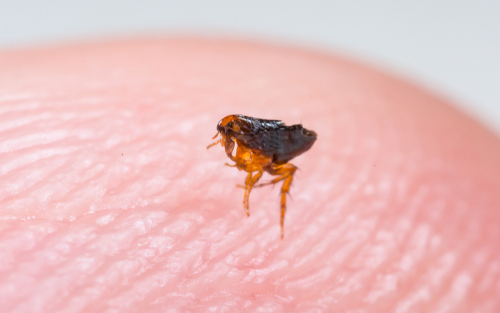
  • Morphology: 1–3 mm, laterally compressed, wingless, dark reddish-brown, equipped with genal and pronotal combs (ctenidia) that lock into host hair and fur.
  • Habitat Preference: Domestic living spaces, turf-canopy interfaces, pet bedding, and shaded lounging spots.
  • Behavior: Obligate hematophagous ectoparasites; adult fleas remain on the primary host post-emergence, continually consuming blood and depositing non-adherent eggs that drop off into the local environment.
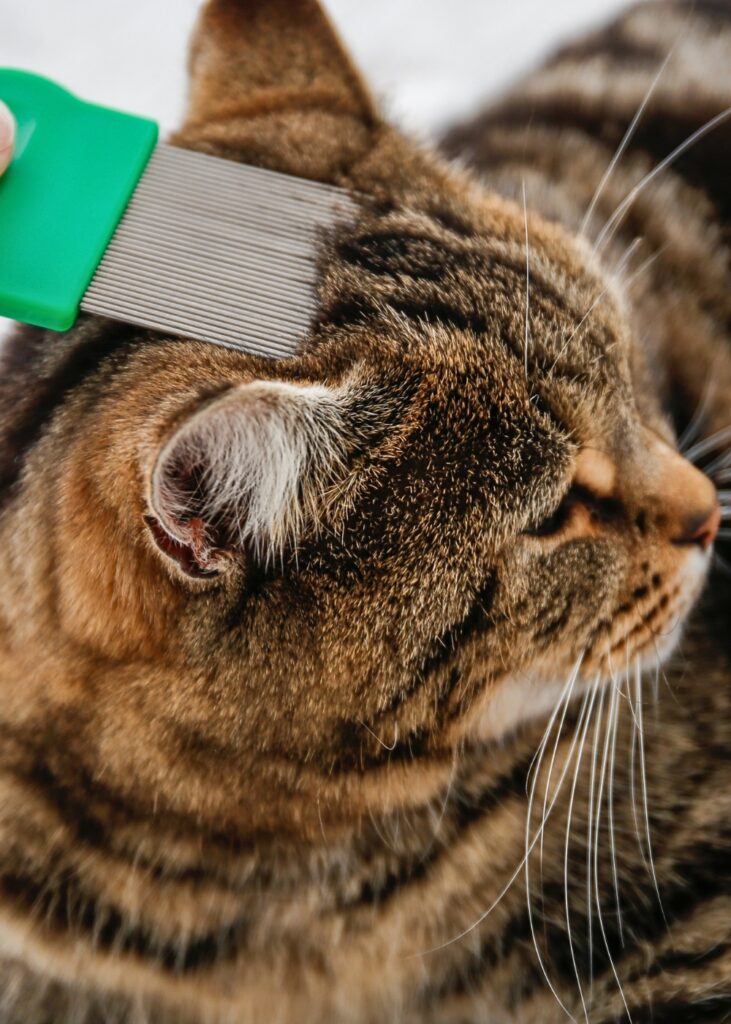
Flea Control Cat Image Mosquito Shield OKC

Generalist Flea
(Pulex irritans)

  • Morphology: Lacks prominent genal and pronotal ctenidia; rounded head profile.
  • Habitat Preference: Rural-suburban edges, agricultural structures, outbuildings, and swine or livestock pens common on the outer fringes of the Oklahoma City metro (e.g., Piedmont, Mustang, Choctaw).
  • Behavior: Highly opportunistic feeder targeting domesticated mammals, wild mesopredators, and humans.

close up photo of flea

3 easy steps to backyard bliss

Win the backyard battle this year.

    Do you agree to receive text messages from Mosquito Shield? Message frequency may vary. Standard messaging and data rates apply. Text STOP to opt-out at any time. Text HELP for support or contact us. Privacy Policy/TOS.
    Yes, I agree to receive text messages from Mosquito Shield.
    No, I do not want to receive text messages from Mosquito Shield.

    See our Privacy Policy/TOS for details on how we handle your information.

    1. 1

      Request Your Free Quote

      We’re out to kill mosquitoes, not your budget. We’ll be upfront about all costs, and you’ll know exactly what payments will look like before you start. Speak to one of our professionals today about getting a quote for your property.
    2. 2

      Schedule Your Service

      Once you’ve received a quote, you can move forward and begin seeing a difference with our services. Any mosquitoes in the area will be killed on contact and a barrier created to deter new mosquitoes from coming in. It takes less than 48 hours to notice a difference.
    3. 3

      Get Back Outside

      You no longer have to wonder what life would be like without mosquitoes. Go back to enjoying any and all outdoor activities without unwanted guests. Taking care of mosquitoes on your property has never been easier.

    Veterinary and Public Health Implications

    Flea infestations introduce notable veterinary pathologies and human disease transmission risks throughout Central Oklahoma:
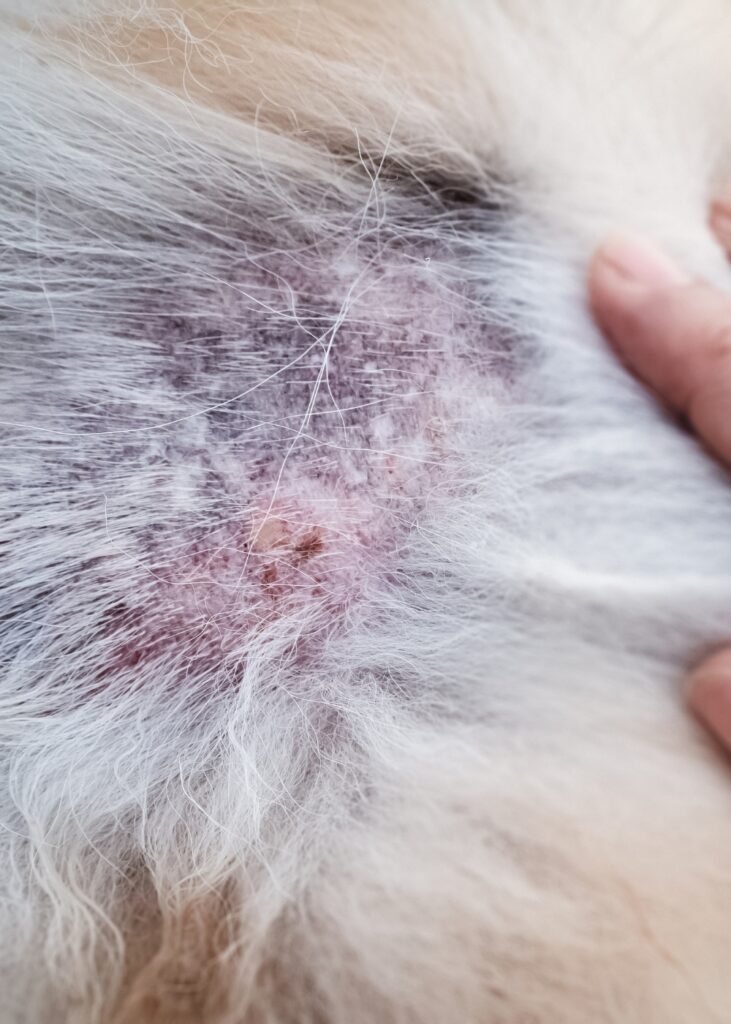
    • Flea Allergy Dermatitis (FAD): Flea salivary antigens injected during feeding elicit severe hypersensitivity reactions in canines and felines, causing intense pruritus, self-trauma, alopecia, and secondary bacterial skin infections.
    • Flea-Borne Spotted Fever (Rickettsia felis): Transmitted primarily through C. felis feces rubbed into bite sites, leading to systemic febrile illnesses.
    • Murine Typhus (Rickettsia typhi): Vector-borne pathogen historically tied to rat fleas (Xenopsylla cheopis), but increasingly documented in suburban cat fleas cycling through urban opossums and feral cat colonies.
    • Cat Scratch Disease (Bartonella henselae): Transmitted among felines through flea excrement and claws, which can then be transmitted to humans via scratches.
    • Dipylidiasis (Dipylidium caninum / Flea Tapeworm): Accidental ingestion of infected adult fleas during pet grooming transmits tapeworm larvae into the gastrointestinal tracts of dogs, cats, and small children.
    GET FREE QUOTE
    Flea Control damaged pet skin Image Mosquito Shield OKC

    Frequently Asked Questions

    01. What other insects will this affect?
    We use a control product so other insects present when and where we spray may be impacted.

    However, our formula was specifically engineered for mosquitoes so it won’t repel any other insects as it does mosquitoes.
    02. Will your product work after storms?
    Yes, we have specifically engineered our formula to outlast storms. With a special polymer layer that provides weather resistance, our formula will remain effective.
    03. Is there any environment you cannot treat?
    Yes, there are some areas we won’t spray to avoid the surrounding environments. Pools, natural water sources, vegetable gardens, and artificial water sources complete the list.

    Because water could easily spread the insecticides, we never directly apply our product to it. However, the rest of the property can still be sprayed and it will drastically reduce the population of mosquitoes.
    04. Does this product work on all mosquitoes and ticks ?
    Yes, we target aspects of mosquitoes and ticks that don’t change from species to species.

    The killing and repelling aspects of our product will work on any species of mosquitoes and ticks .
    05. What about my children and pets?
    Pets and children should be inside during each application. However, they can re-enter the property once the product has dried, roughly 10-15 minutes. At that point, there are no restrictions until the next application.
    06. When can I start to see the effects?
    Every yard is different but you should notice a dramatic reduction within 24-48 hours of the initial spray.

    With each subsequent treatment, the results continue to improve, allowing you to enjoy time outside without being chased in by swarms of mosquitoes.
    07. Why do we see more mosquitoes after it has rained?
    Mosquitoes are more abundant after it rains because standing water is where they breed.

    Adult, female mosquitoes will lay their eggs in water. Once fully submerged, the countdown begins and the eggs can hatch in as little as a few days.

    Shield Your Yard Now