Frisco is experiencing an accelerated timeline. Warmer-than-average late winter temperatures combined with significant spring precipitation have created optimal breeding conditions earlier in the calendar year. While the traditional “peak” season in the Dallas-Fort Worth metropolitan area spans from June through September, active mosquito populations in 2026 have established themselves as early as March and April.
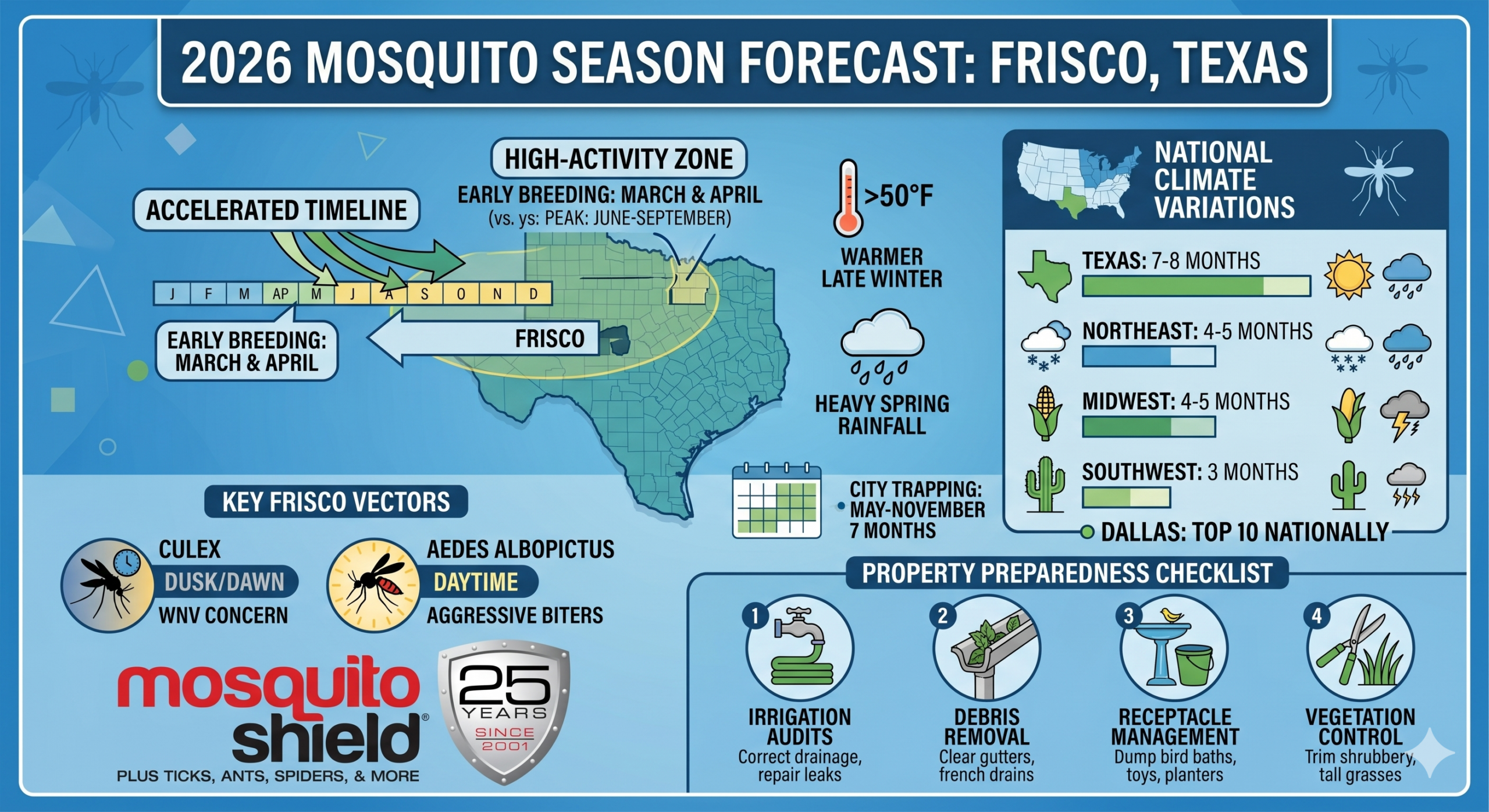
Mosquito seasonality varies drastically depending on geographical and climatic zones. Texas currently ranks among the most mosquito-dense regions in the United States, with the broader Dallas area regularly appearing in the top 10 nationally for mosquito activity.
Texas is home to 85 distinct mosquito species, the highest diversity of any state in the US. In Frisco and the surrounding suburban environments, two primary behavioral types impact the local population:
The presence of both diurnal and crepuscular species means that Frisco residents experience overlapping feeding cycles, rendering outdoor areas susceptible to mosquito activity at all hours of the day.
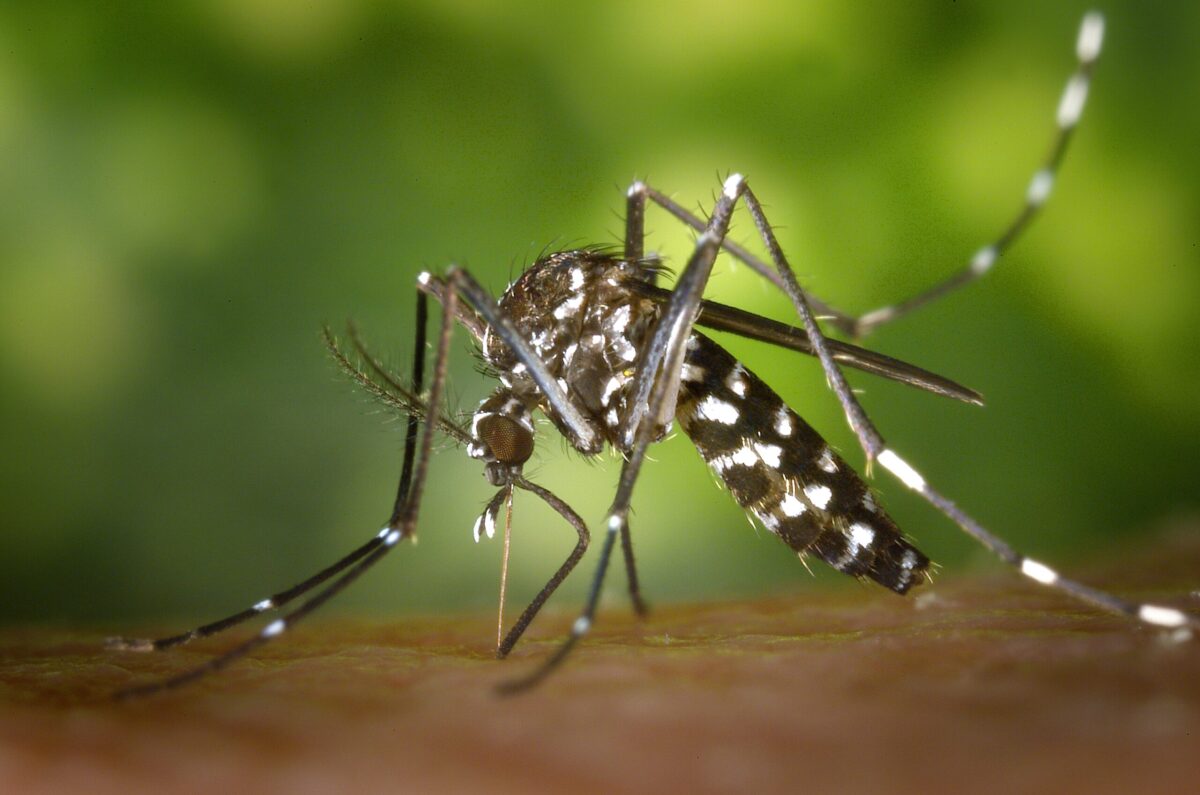
The 2026 forecast indicates heavy, early-season vector pressure, passive environmental management is required to interrupt the breeding cycle. Mosquitoes require less than a bottle cap of water to lay up to 300 eggs, and in temperatures exceeding 80°F, the maturation cycle from egg to biting adult can compress to just 7 to 10 days.
To reduce localized population density, property management should focus on eliminating micro-habitats: