Mosquitoes require water for their aquatic egg, larval and pupal stages, but that does not mean they thrive equally well in every body of water.
Properly designed wet retention ponds generally contain deeper permanent water. EPA guidance notes that most mosquitoes are more likely to reproduce in shallow standing water or areas with dense aquatic vegetation than in the open, deeper portions of a well-maintained retention basin. Fish, aquatic insects and other natural predators can also consume mosquito larvae.
That means the large open-water area homeowners see from their backyard may not actually be the most important part of the pond from a mosquito standpoint.
Problems are more likely to develop around the edges or in other locations where water becomes shallow, stagnant and protected.
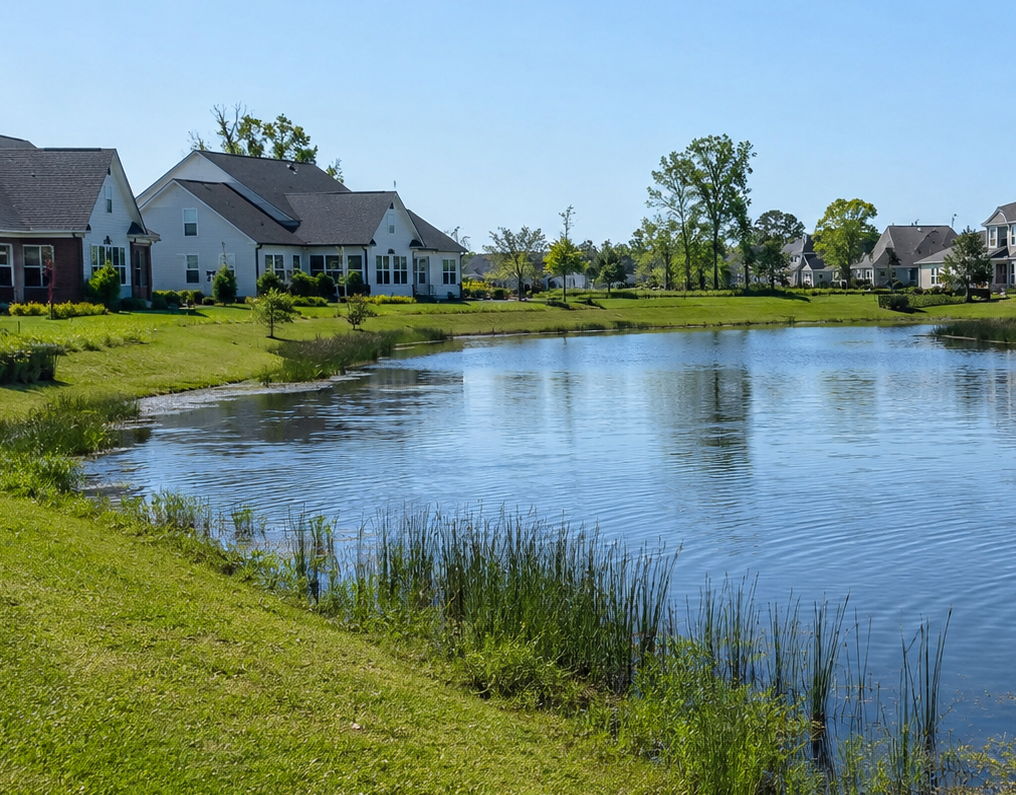
Retention ponds change over time. Sediment can accumulate, vegetation can become dense, drainage structures can clog, shorelines can erode and changing water levels can create isolated shallow pools.
These conditions can create exactly the kind of protected standing water mosquitoes use.
EPA stormwater guidance identifies shallow areas around pond margins as important potential mosquito-producing habitat. Fluctuating water levels can also leave temporary pockets of water in low areas where mosquitoes may develop.
That is particularly relevant around Savannah, where frequent rainfall, warm temperatures and abundant vegetation can create favorable mosquito conditions for long portions of the year.
Regular retention pond maintenance therefore matters. Keeping inlets and outlets clear, managing excessive vegetation, removing accumulated debris and sediment, and correcting erosion or drainage problems can help prevent areas around a pond from becoming unnecessarily favorable mosquito habitat.
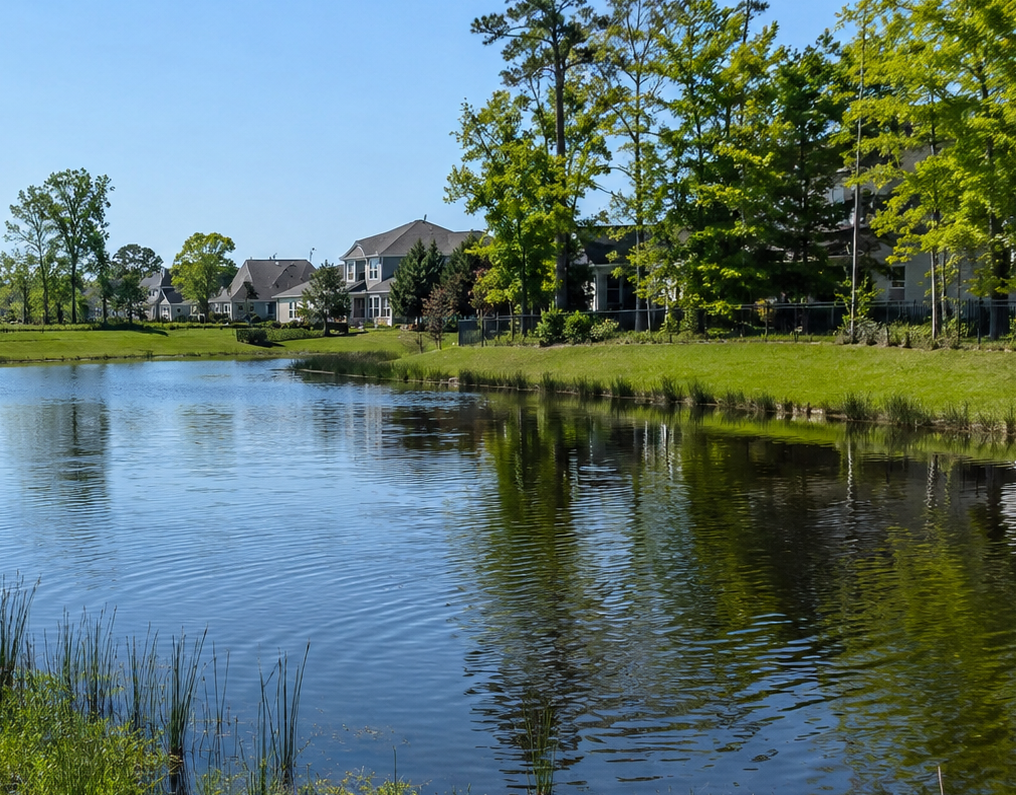
A nearby retention pond is an obvious suspect when mosquitoes seem particularly heavy, but homeowners should also look much closer to the house.
Plant saucers, gutters, toys, tarps, birdbaths, buckets and small depressions can provide mosquito breeding habitat. In some cases, the small amount of stagnant water beside a home may matter more than the large body of open water behind it.
Adult mosquitoes may also rest in shaded landscaping, shrubs, tall vegetation and protected areas around the property after emerging from breeding sites nearby.
Mosquito Shield of Savannah approaches mosquito control by targeting the areas around a property where mosquitoes commonly rest and congregate. For homes near retention ponds, wetlands or other water features, reducing mosquito activity often requires looking at the entire environment rather than blaming a single body of water.
A retention pond can contribute to mosquito problems when conditions around it become favorable, but a properly functioning pond is only one part of the larger mosquito habitat surrounding Savannah homes.