Huntsville

Alpha-Gal Syndrome in Huntsville

The Primary Vector The Lone Star Tick

The lone star tick is an aggressive, generalist ectoparasite and the primary driver of alpha-gal sensitization across the Southeastern United States.
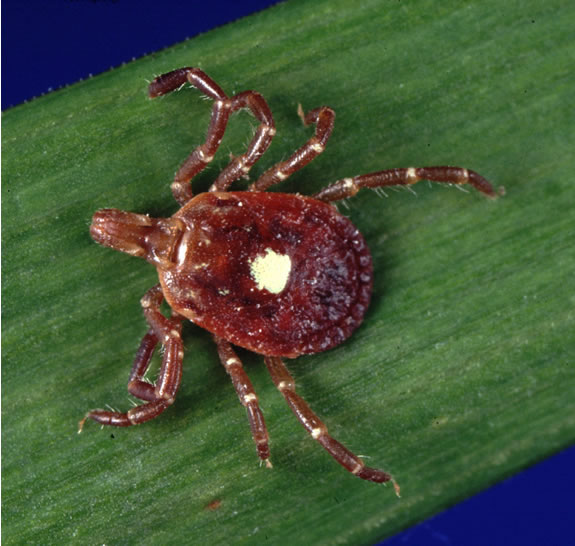
  • Physical Characteristics: Adult females possess a prominent white or silvery spot (“lone star”) on the posterior margin of the scutum. Adult males exhibit faint, pale festoon markings along the outer perimeter of the abdomen.
  • Host Range & Questing Dynamics: Unlike blacklegged ticks (Ixodes scapularis), which rely heavily on passive questing on low vegetation stems, lone star ticks actively pursue hosts via vibration, carbon dioxide, and infrared detection. They readily feed on white-tailed deer (Odocoileus virginianus), raccoons, wild turkeys, domestic dogs, and humans.
    Asthma and Allergy Foundation of America
  • Sensitization Mechanism: When a lone star tick feeds on a non-human mammal, it ingests alpha-gal molecules. During a subsequent blood meal on a human, tick salivary glycoproteins containing the alpha-gal epitope are transferred into host subdermal tissue. The human immune system, which naturally lacks alpha-gal and produces basal antibodies against it, reacts by generating high titers of alpha-gal-specific Immunoglobulin E (sIgE) antibodies.
    Missouri Department of Health and Senior Services – MO.gov
Lone Star Ticks

Environmental Exposure Vectors in Madison County

  1. Riparian Corridors: Drainages along Indian Creek, Beaverdam Creek, and the Flint River maintain elevated ambient humidity and dense deciduous canopies. High microclimatic moisture prevents tick desiccation during dry spells.
  2. Plateau Foothills and Nature Preserves: Habitats across Monte Sano, Green Mountain, and Wade Mountain maintain robust white-tailed deer populations, serving as reproductive maintenance hosts for adult female ticks.
  3. Suburban Edge Encroachment: Residential developments in Madison, Harvest, Hazel Green, and Hampton Cove frequently interface with managed greenways and forest boundaries. Lone star ticks cross manicured turf grass from perimeter leaf litter lines, exposing residents within standard residential yard perimeters.
Quiet backyard by the woods

3 easy steps to backyard bliss

Win the backyard battle this year.

    Do you agree to receive text messages from Mosquito Shield? Message frequency may vary. Standard messaging and data rates apply. Text STOP to opt-out at any time. Text HELP for support or contact us. Privacy Policy/TOS.
    Yes, I agree to receive text messages from Mosquito Shield.
    No, I do not want to receive text messages from Mosquito Shield.

    See our Privacy Policy/TOS for details on how we handle your information.

    1. 1

      Request Your Free Quote

      We’re out to kill mosquitoes, not your budget. We’ll be upfront about all costs, and you’ll know exactly what payments will look like before you start. Speak to one of our professionals today about getting a quote for your property.
    2. 2

      Schedule Your Service

      Once you’ve received a quote, you can move forward and begin seeing a difference with our services. Any mosquitoes in the area will be killed on contact and a barrier created to deter new mosquitoes from coming in. It takes less than 48 hours to notice a difference.
    3. 3

      Get Back Outside

      You no longer have to wonder what life would be like without mosquitoes. Go back to enjoying any and all outdoor activities without unwanted guests. Taking care of mosquitoes on your property has never been easier.

    Symptom Spectrum

    • Dermatologic: Pruritus, widespread urticaria (hives), erythema, and angioedema (swelling of lips, tongue, uvula, and periorbital tissue).
      Asthma and Allergy Foundation of America
    • Gastrointestinal: Severe abdominal cramping, nausea, persistent emesis, and acute diarrhea. In isolated gastrointestinal variants, patients experience acute abdominal distress without cutaneous hives, frequently leading to misdiagnoses of irritable bowel syndrome (IBS) or food poisoning.
      UT Southwestern Medical Center
    • Cardiovascular & Respiratory: Hypotension, syncope, wheezing, and airway constriction, presenting as life-threatening anaphylaxis.

    Environmental Prevention and Perimeter Control

    Mitigating alpha-gal syndrome requires breaking the tick-host interface in residential environments.

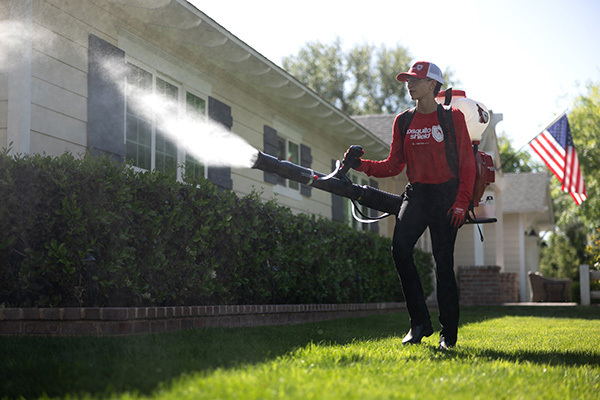
    • Physical Habitat Modification: Eliminate decaying leaf litter, brush piles, and fallen organic matter along fence lines and property borders. Maintain a three-foot crushed stone or cedar mulch barrier between dense woodland lines and turf grass to discourage tick transit.
      Alabama Department of Public Health (ADPH)
    • Host Exclusion: Implement physical exclusion or unpalatable native plantings to prevent white-tailed deer from transiting inner yard perimeters and shedding gravid female ticks.
    • Personal Defense: Apply 0.5% permethrin treatments to outdoor apparel, boots, and gear. Use EPA-registered skin repellents containing DEET, Picaridin, or Oil of Lemon Eucalyptus (OLE) prior to entering greenway corridors, nature preserves, or transitional brush zones. Promptly inspect skin and remove attached ticks using fine-tipped forceps with sustained, perpendicular traction.
    Lyme Disease check for ticks after going outside

    Frequently Asked Questions

    01. What other insects will this affect?
    We use a control product so other insects present when and where we spray may be impacted.

    However, our formula was specifically engineered for mosquitoes so it won’t repel any other insects as it does mosquitoes.
    02. Will your product work after storms?
    Yes, we have specifically engineered our formula to outlast storms. With a special polymer layer that provides weather resistance, our formula will remain effective.
    03. Is there any environment you cannot treat?
    Yes, there are some areas we won’t spray to avoid the surrounding environments. Pools, natural water sources, vegetable gardens, and artificial water sources complete the list.

    Because water could easily spread the insecticides, we never directly apply our product to it. However, the rest of the property can still be sprayed and it will drastically reduce the population of mosquitoes.
    04. Does this product work on all mosquitoes and ticks ?
    Yes, we target aspects of mosquitoes and ticks that don’t change from species to species.

    The killing and repelling aspects of our product will work on any species of mosquitoes and ticks .
    05. What about my children and pets?
    Pets and children should be inside during each application. However, they can re-enter the property once the product has dried, roughly 10-15 minutes. At that point, there are no restrictions until the next application.
    06. When can I start to see the effects?
    Every yard is different but you should notice a dramatic reduction within 24-48 hours of the initial spray.

    With each subsequent treatment, the results continue to improve, allowing you to enjoy time outside without being chased in by swarms of mosquitoes.
    07. Why do we see more mosquitoes after it has rained?
    Mosquitoes are more abundant after it rains because standing water is where they breed.

    Adult, female mosquitoes will lay their eggs in water. Once fully submerged, the countdown begins and the eggs can hatch in as little as a few days.

    Shield Your Yard Now