The local mosquito season typically mirrors our “severe weather” season, beginning in late March or April and extending until the first hard frost in November. However, the intensity of these populations is driven by two specific Oklahoma weather patterns:
Spring Inundation: The heavy thunderstorms and flash flooding common in Central Oklahoma create ideal breeding grounds for “floodwater” mosquitoes (Aedes vexans). These species lay eggs in dry soil that hatch simultaneously when submerged, leading to sudden, massive swarms following rain events.
The Heat-Humidity Cycle: During the peak of an Oklahoma summer, temperatures consistently above 90°F combined with high humidity accelerate the mosquito life cycle. Under these conditions, larvae can transition to biting adults in as little as five to seven days.

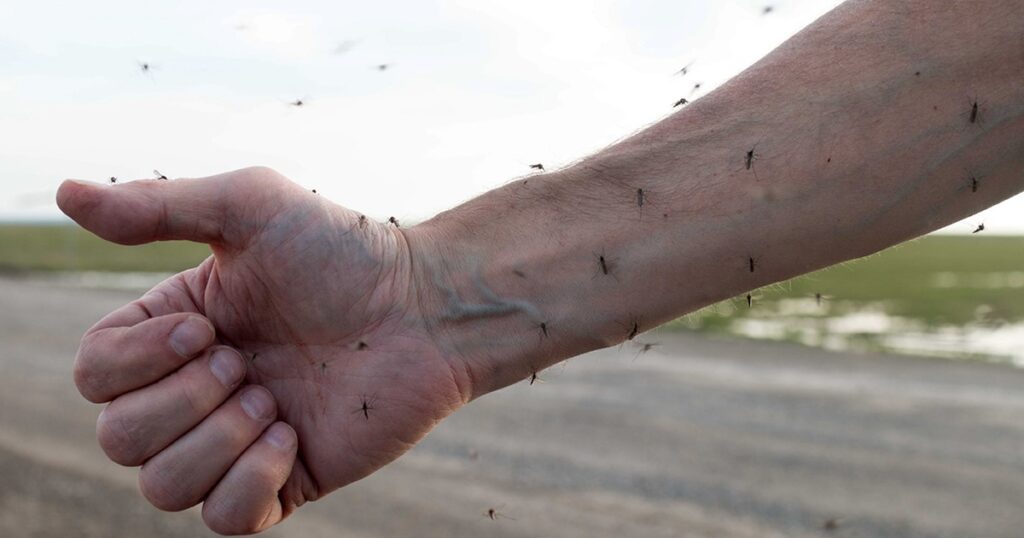
While a single bite is an annoyance, a high frequency of bites indicates a localized breeding site.
The “One-Minute Test”: If you cannot stand in your backyard for more than 60 seconds without being approached by multiple mosquitoes, your property likely has a high population of Aedes albopictus (Asian Tiger Mosquitoes). This species is an aggressive daytime biter common in OKC’s urban and suburban areas.
Skeeter Syndrome: For many, especially children, an increase in bites leads to “Skeeter Syndrome”—large, painful, and inflammatory reactions. When the physical toll prevents children from playing outdoors, the threshold for professional management has been met.
Oklahoma City remains a significant area for West Nile Virus (WNV) monitoring. Unlike floodwater mosquitoes, the Culex species—which carries WNV—thrives in stagnant, organic-rich water (like clogged gutters or neglected birdbaths) during the hotter, drier months of late summer.
Dusk and Dawn Activity: If you notice a surge in activity during these specific windows, the risk of encountering disease-carrying species increases significantly.
Local Health Alerts: When the Oklahoma City-County Health Department (OCCHD) reports positive mosquito pools in the metro area, the risk is no longer just a nuisance; it is a community health priority.