
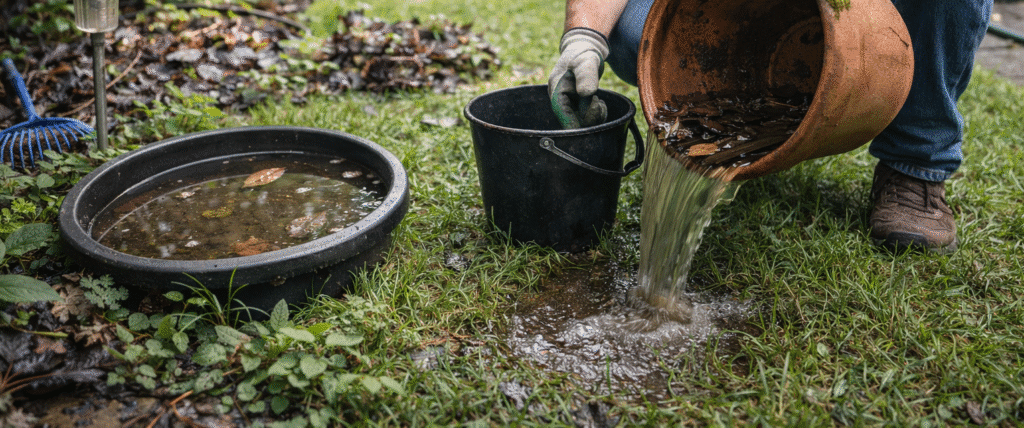
The best time to prepare your yard for mosquitoes is before biting activity becomes constant. Removing standing water, managing vegetation, correcting drainage problems, and identifying shaded resting areas can make the property less favorable as temperatures rise.
How Should You Prepare Your Yard for Mosquito Season?
Begin by emptying standing water, cleaning gutters, correcting poor drainage, trimming dense vegetation, clearing organic debris, and checking outdoor containers after rain. Then inspect the shaded, humid parts of the yard where adult mosquitoes may rest. Starting early helps reduce breeding opportunities before mosquito populations grow and allows professional mosquito control to focus on the areas where activity is most likely to develop.
Why Early Yard Preparation Matters
Mosquito activity is easier to manage before breeding and resting areas become established across the property.
Mosquitoes depend on water during the early stages of their life cycle. Adult mosquitoes also seek shaded, humid, and protected places where they can rest between feeding and breeding.
A yard with water-filled containers, clogged gutters, dense vegetation, damp debris, or poor drainage can provide several of these conditions at once. As temperatures rise, small problem areas can contribute to increasing mosquito pressure around patios, play areas, gardens, and entryways.
Preparation Is About Reducing Opportunity
You do not need a pond or visibly neglected yard to have mosquito activity. A small amount of water in a hidden container, blocked gutter, toy, or plant saucer may be enough to support mosquito development.
Preparing early does not make a yard mosquito-free. It removes favorable conditions and makes it more difficult for populations to develop close to the places your family uses most.
Eight Steps to Take Before Mosquito Season
Walk through the yard methodically instead of only checking the most visible areas. Mosquito-supporting conditions are often found along property edges, behind outdoor furniture, beneath vegetation, or anywhere water and shade overlap.
Empty Standing Water
Tip out water collected in buckets, plant saucers, toys, tarps, wheelbarrows, watering cans, decorative containers, furniture covers, and other objects. Look for items that can hold water even if they were not designed as containers.
Clean Gutters and Downspouts
Remove leaves, twigs, and sediment that prevent water from draining. Confirm that downspouts discharge properly and do not create persistently wet areas near the foundation or landscaping.
Correct Drainage Problems
Watch where water collects after rain or irrigation. Low areas, blocked drains, leaking outdoor faucets, damaged hoses, and poorly directed downspouts can create recurring moisture that should be corrected.
Maintain Pools and Water Features
Keep swimming pools properly maintained and circulating. Clean pool covers and remove water that collects on top. Decorative ponds, fountains, birdbaths, and other water features should be maintained according to their design and checked regularly.
Trim Dense Vegetation
Thin overgrown shrubs, tall grass, weeds, and dense ground cover, especially near patios, decks, doors, play areas, and other frequently used spaces. Reducing heavy shade and improving airflow can make these areas less attractive as resting sites.
Clear Leaves and Organic Debris
Remove leaf piles, grass clippings, brush, and other debris that can retain moisture and create protected resting areas. Pay particular attention to shaded property edges, fence lines, spaces beneath decks, and areas behind sheds.
Manage Irrigation Carefully
Avoid overwatering lawns and gardens. Adjust sprinkler heads that repeatedly soak shaded areas, hard surfaces, or the foundation, and repair leaks that keep soil or mulch continuously damp.
Recheck the Yard After Rain
One cleanup is not enough for the entire season. Walk the yard after storms and irrigation cycles to find newly collected water, blocked drainage, fallen debris, or containers that were missed during the first inspection.
Mosquito Breeding Areas Homeowners Often Miss
The most productive water source may be much smaller and less visible than expected.
Children’s Items
Toys, playsets, plastic vehicles, sandboxes, and small pools may contain recessed areas where rainwater remains after the rest of the yard dries.
Outdoor Equipment
Grill covers, folded tarps, lawn equipment, stored tires, wheelbarrows, and overturned furniture may catch and conceal small pockets of water.
Landscaping Features
Plant saucers, hollow decorations, tree cavities, clogged landscape drains, uneven edging, and folds in landscape material can retain moisture.
Mosquito eggs and larvae can be easy to overlook. If an item can hold water, include it in the inspection even when the amount seems insignificant.
Where Adult Mosquitoes Rest Around the Yard
Removing water helps interrupt breeding, but adult mosquitoes can still enter the property from surrounding areas. During hot or bright parts of the day, many seek cooler, shaded locations protected from wind.
Common resting areas can include:
✓ The undersides of leaves in dense shrubs and ground cover
✓ Shaded areas beneath decks, porches, and outdoor stairs
✓ Damp spaces near fences, sheds, woodpiles, and property lines
✓ Thick vegetation around patios, gardens, and entryways
✓ Areas where moisture, shade, and limited airflow overlap
These areas matter because successful mosquito management addresses both aquatic breeding locations and the places adult mosquitoes use throughout the day.
Build a Simple Mosquito-Season Yard Routine
Yard preparation works best as a recurring habit, especially during warm and rainy periods.
After rainfall: Empty newly collected water and check drainage areas, covers, toys, containers, and outdoor equipment.
During regular lawn care: Trim overgrowth, remove debris, and look for damp or shaded areas where activity appears concentrated.
Before outdoor gatherings: Inspect the spaces guests will use, including seating areas, patios, play zones, and paths through dense landscaping.
Throughout the season: Note when and where mosquito activity is strongest. These patterns can help a professional technician identify likely breeding and resting areas.
What Yard Preparation Can and Cannot Do
Yard preparation can reduce the number of breeding and resting opportunities on your property. It may also make mosquito activity easier to identify and manage as the season progresses.
However, mosquitoes do not recognize property lines. Adults can travel into a maintained yard from neighboring properties, wooded areas, drainage systems, wetlands, and other nearby environments. Weather can also create new breeding sites faster than homeowners can permanently remove them.
The Realistic Goal
Yard preparation reduces the conditions mosquitoes use. Professional control can then target active populations and likely resting areas as part of a broader seasonal strategy.
This is also why waiting until the yard becomes difficult to use can make mosquito pressure more frustrating. Learn more about when mosquito season is typically at its worst and why earlier timing matters.
How Yard Preparation Supports Mosquito Control
Homeowner maintenance and professional treatment address different parts of the mosquito problem.
Removing standing water helps reduce breeding opportunities that can be corrected around the property. Professional mosquito control focuses on active mosquito populations and the shaded, protected environments adult mosquitoes are likely to use.
MoShield technicians evaluate the yard and target mosquito-prone areas rather than treating every surface identically. Recurring visits can respond to changing weather, vegetation, moisture, and mosquito pressure throughout the season.
Explore MoShield’s professional mosquito control service or learn more about mosquito behavior, breeding, and control.
What About Ants, Spiders, and Other Yard Pests?
Some of the same conditions that support mosquitoes can also contribute to other pest activity. Moisture, dense vegetation, debris, and sheltered access near the house may attract ants, spiders, cockroaches, and other crawling insects.
Mosquito control and perimeter pest control serve different purposes. Mosquito control focuses on mosquitoes and other targeted flying pests across the yard. MoShield’s Perimeter Pest Shield service focuses on crawling pests around the exterior of the home and common access areas.
If crawling bugs are also appearing near the foundation or moving indoors, explore how Perimeter Pest Shield helps reduce exterior pest pressure.
Questions About Preparing for Mosquito Season
When Should I Start Preparing My Yard for Mosquito Season?
Start before mosquito activity becomes consistent, often in early spring or before sustained warm weather arrives in your area. Exact timing varies by regional climate. Early preparation gives you time to correct drainage, remove water-holding items, and reduce overgrowth before populations increase.
How Often Should I Check My Yard for Standing Water?
Check the yard regularly during mosquito season and again after rain, irrigation, or outdoor projects that may introduce new containers or drainage problems. Water can collect again even after a thorough initial cleanup.
How Much Water Do Mosquitoes Need to Breed?
Some mosquitoes can develop in surprisingly small amounts of water. That is why plant saucers, toys, clogged gutters, folded covers, and other small collection points should not be ignored.
Does Cutting the Grass Keep Mosquitoes Away?
Regular lawn care can reduce some shaded resting areas, but mowing alone will not address standing water, dense shrubs, damp debris, clogged drainage, or mosquitoes entering from surrounding properties.
Can Mosquitoes Still Be a Problem Without Standing Water in My Yard?
Yes. Adult mosquitoes can enter from neighboring properties, natural areas, drainage systems, and other nearby environments. Removing water from your yard reduces local breeding opportunities but cannot prevent all outside activity.
Should I Prepare the Yard Before Professional Mosquito Treatment?
Removing accessible standing water, clearing unnecessary debris, and maintaining the yard can support the broader control strategy. Your local technician may provide additional preparation instructions based on the property and planned service.
How Can I Find Mosquito Control Near Me?
Use MoShield’s location finder to connect with a local provider, confirm service availability, and request information for your property.
Get Your Yard Ready for Mosquito Season
MoShield targets mosquito-prone environments throughout the season to help you spend more time enjoying your outdoor spaces.
Treatment recommendations, schedules, target pests, and service availability may vary by location.


