Mosquito development is directly tied to ambient temperature. Because mosquitoes are poikilothermic (cold-blooded), metabolic rates, larval maturation, and reproductive intervals speed up dramatically as temperatures rise.

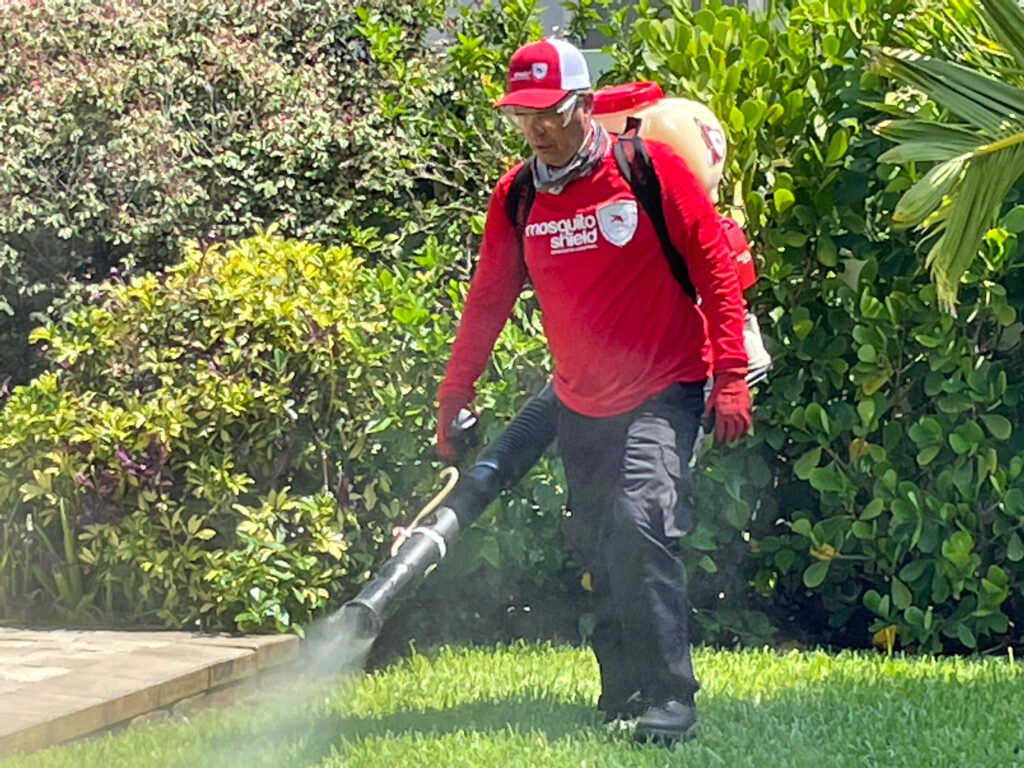
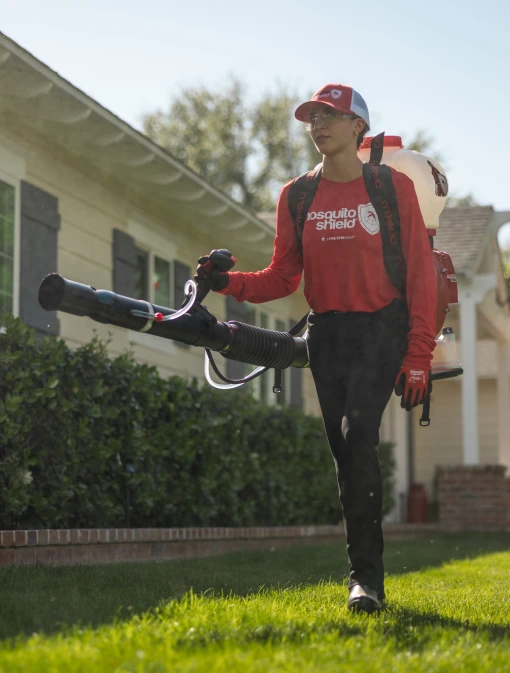
Professional perimeter barriers use microencapsulated or emulsifiable active chemistries (such as synthetic pyrethroids or essential botanical compounds) formulated to bond with outdoor foliage, wooden fences, and structural substrates. In the laboratory, these formulations may retain high efficacy for weeks; however, outdoors in North DFW, three factors accelerate degradation:
High Ultraviolet (UV) Exposure and Thermal Stress
North Texas averages an extreme Solar UV Index (frequently exceeding level 10) between May and August. Direct solar radiation causes photochemical decomposition of exposed chemical bonds, breaking active compounds down into biologically inert metabolites. Sustained leaf surface temperatures above 100∘F further accelerate this volatile breakdown.
Suburban Irrigation and Automated Sprinklers
Suburban turf management in communities like Frisco, Plano, McKinney, and Southlake relies heavily on automated sprinkler systems. Sprinklers run multiple times weekly to protect foundation clay and turf during the heat of summer.
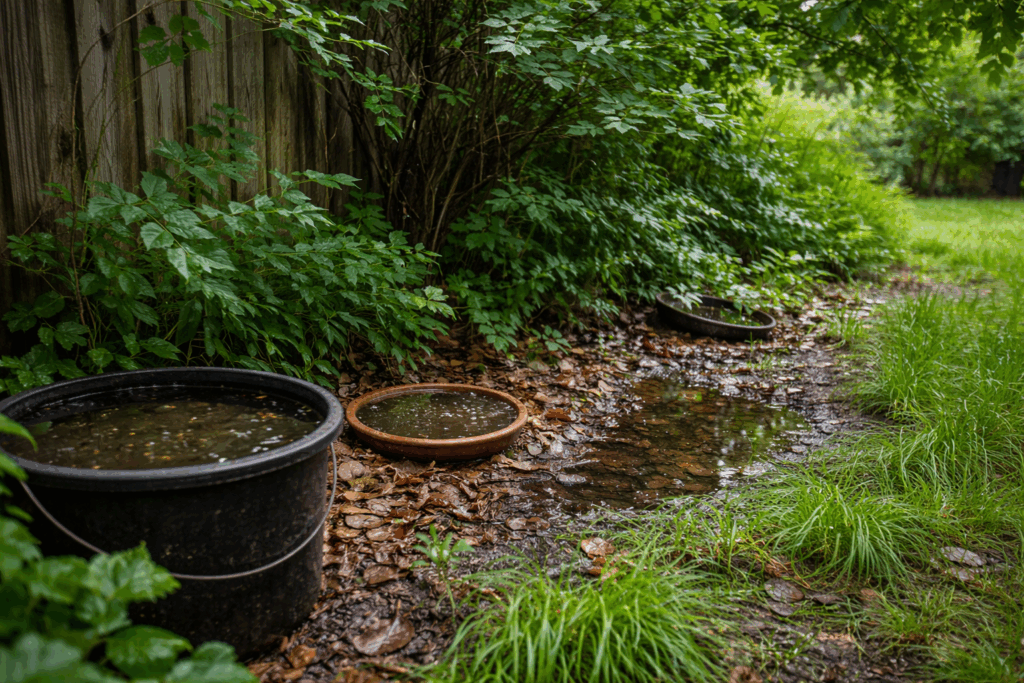
Increasing the cadence of barrier applications does not require oversaturating the ecosystem with heavy chemical volumes. Instead, it relies on targeted, micro-dose layering: